Dow Futures remain slightly below the flatline as investors evaluate the excitement surrounding artificial intelligence alongside the persistent tensions in the Middle East. Oil prices are on the rise once more, coinciding with the OECD’s downward revision of its global economic growth forecast. The Trump administration proposes at least 10% tariffs on imports from 60 economies following a probe into goods allegedly produced using forced labour. SpaceX is reportedly targeting a valuation of $1.75 trillion in a mammoth IPO next week.
Dow futures exhibited a lacklustre performance on Wednesday following the S&P 500 benchmark’s continuation of its record closing streak. The fervent optimism surrounding artificial intelligence served to mitigate the challenges posed by escalating tensions in the Middle East. By 03:31, the Dow futures contract had declined by 109, or 0.2%, S&P 500 futures had decreased by 4 points, or 0.1%, while Nasdaq 100 futures remained largely stable. On Tuesday, the S&P 500 achieved an all-time closing peak for the ninth consecutive session, marking its longest such streak since May 2025. The blue-chip Dow Jones Industrial Average increased by 0.4%, achieving a new record high, while the tech-heavy Nasdaq Composite experienced a slight uptick. All three of the major averages have recorded all-time high closing levels for five consecutive sessions, a streak not observed since 2017. Chip stocks supported a significant portion of the rally, as an index monitoring these companies increased by 5.9%. Since slumping to a 2026 trough in March, the PHLX Semiconductor Index has now surged by over 90%, underscoring the optimism among investors regarding a substantial influx of capital into the infrastructure essential for advancing state-of-the-art AI models. One of the standout performers from the session was Marvell Technology, whose shares soared after Nvidia CEO Jensen Huang suggested that the group was on its way to becoming the “next trillion-dollar company. On the economic calendar for the day, investors will be monitoring a reading of activity in the crucial services sector, alongside a report on private-sector payrolls for May.
The U.S. military reported that Iranian air attacks on Kuwait, Bahrain, and other targets have either been successfully repulsed or have failed to achieve their objectives, according to the information provided. Meanwhile, Iranian state media indicated that the Islamic Revolutionary Guard Corps had targeted the U.S. Fifth Fleet headquarters in Bahrain as a response to a U.S. assault on a communications tower located south of Qeshm, according to the news agency. These developments have tempered expectations regarding a potential agreement between the U.S. and Iran to resolve their prolonged conflict, which has persisted for over three months. This comes despite President Donald Trump’s assertion that discussions between Washington and Tehran continue. Concerns have proliferated that the prolonged duration of the conflict will exacerbate its effects on the global economy. Such concerns were highlighted by the OECD on Wednesday, which revised down its global growth forecast and cautioned of a deteriorating economic environment if the conflict persists in disrupting energy markets. OECD Chief Economist Stefano Scarpetta indicated that, in the worst-case scenario, shipping disruptions may persist well into the following year, potentially pushing some economies toward — or even into — a recession.
Inflation continues to be a significant concern, with the OECD forecasting that, in a worst-case scenario, global prices may rise by 0.4 percentage points in 2026 and 1.3 percentage points in 2027. Much of that is attributable to the prolonged effective closure of the Strait of Hormuz, a crucial maritime route situated off Iran’s southern coast, through which approximately one-fifth of the global oil and liquefied natural gas supply was transported prior to the onset of the conflict in late February. As discussions between the U.S. and Iran reach an impasse, markets are contending with the prospect that the strait will remain closed to tanker traffic. This situation is likely to elevate oil prices, exacerbate inflationary pressures, and potentially compel central banks to consider increasing interest rates in reaction. Brent crude futures, the global oil benchmark, were last observed trading 2.0% higher at $97.93 a barrel. Optimism surrounding the potential for a U.S.-Iran peace agreement has driven the contract below recent highs exceeding $100 a barrel, while Brent continues to surpass pre-war levels.
The Trump administration on Tuesday proposed sweeping new tariffs of at least 10% on imports from 60 economies, citing that their failure to block goods produced with forced labour has unfairly harmed American businesses and workers. Investigations conducted under Section 301 of the Trade Act determined that the economies’ policies concerning forced-labor imports were “unreasonable” and imposed burdens on U.S. commerce, according to the Office of the U.S. Trade Representative. “The failure of our most important trading partners to address the importation of goods made with forced labour is unacceptable,” stated U.S. Trade Representative Jamieson Greer. Under the proposal, nations that have enacted forced-labor import bans, pledged to such measures within trade agreements, or maintain partial restrictions would incur supplementary duties of 10%.
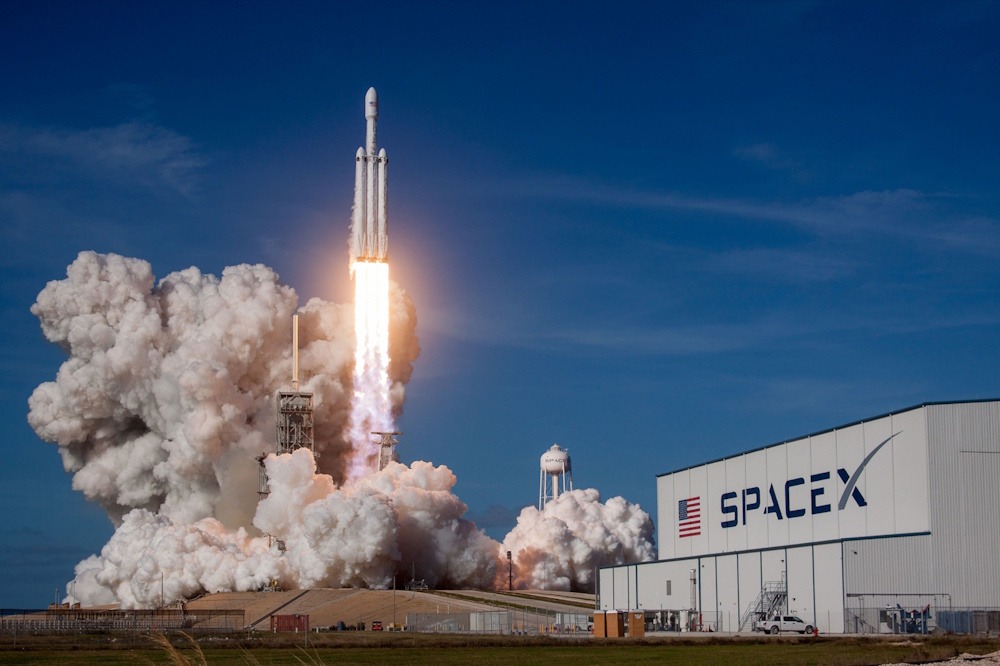
SpaceX intends to secure $75 billion through its initial public offering by offering approximately 555.6 million shares at a price of $135 each, according to a source familiar with the situation, as reported on Tuesday. The rocket and satellite company, under the leadership of Elon Musk, is aiming for a valuation of $1.75 trillion in an upcoming IPO next week. According to a separate report, the offering will be composed entirely of new shares. The roadshow for the SpaceX initial public offering is anticipated to commence this Thursday. Earlier reports indicated that SpaceX is poised to establish the terms of its IPO by Wednesday afternoon at the latest. The company is poised to initiate a series of significant initial public offerings this year, with artificial intelligence startups OpenAI and Anthropic also preparing to enter the public markets in the upcoming months.