
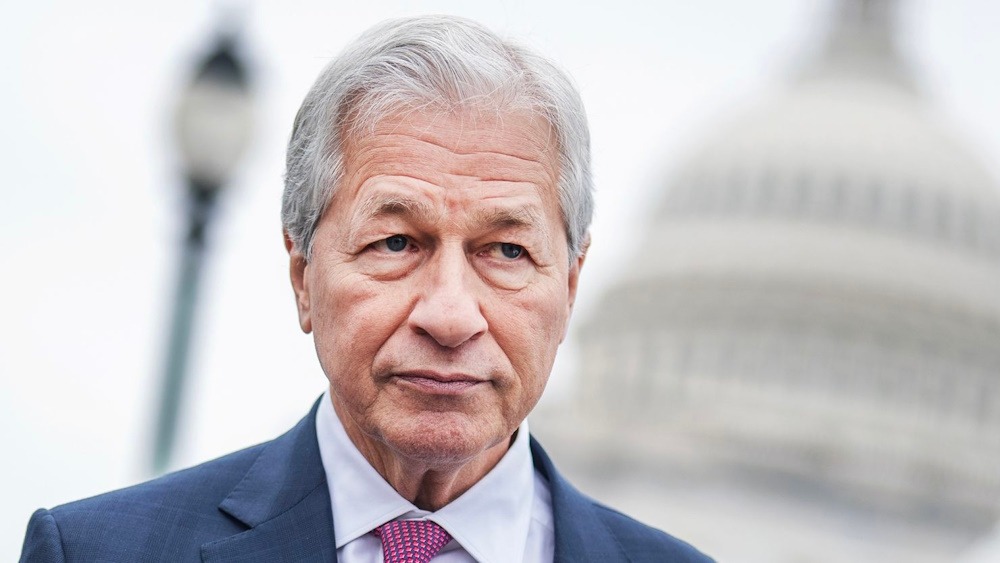
Dimon told Fox News the account issues came from the strict federal rules big banks work under, rules that force JPMorgan to run more than a million AML alerts every year as part of its oversight. He said Devin Nunes was twisting the situation and made it clear politics had nothing to do with it, noting that pressure for tougher checks has come from both parties for years.
Dimon argued the narrative around political targeting ignores how often federal monitors press banks to elevate scrutiny, even in situations that have nothing to do with ideology. “People have to grow up here, OK, and stop making up things,” Dimon told host Maria Bartiromo.
“We do not debank people for religious or political affiliations. We have debanked different folks, but never for that reason.
Scrutiny intensified once investigators began mapping out how far federal probes had stretched into private communications and media networks. Nunes, who serves as Trump Media CEO and chairs the President’s intelligence advisory board, has spent weeks accusing JPMorgan of terminating the company’s accounts right before it went public in March 2024.
He claims the bank coordinated with Jack Smith’s special counsel investigation, which issued subpoenas to over 400 Trump-linked individuals and organizations under a probe codenamed Arctic Frost.
Florida Attorney General James Uthmeier opened an investigation into JPMorgan last month over these allegations. He wrote to Dimon, saying the timing of their cutting off Trump Media looked suspicious and might break Florida’s anti-fraud and debanking laws. Sources close to the investigation told Fox News that the evidence appears damning.
The dispute grew when Strike CEO Jack Mallers admitted that JPMorgan closed his personal accounts without explanation last month. When he asked for a reason, bank representatives told him they couldn’t say. Senator Cynthia Lummis responded by slamming Operation Chokepoint 2.0 for crushing trust in banks and forcing crypto businesses offshore.
According to a House Financial Services Committee report from early December, at least 30 crypto companies got shut out from banking between 2022 and 2024 under regulatory pressure.
The FDIC issued pause letters to 24 big banks requesting that they halt crypto-related activities. Coinbase, Marathon Digital, and founders from Uniswap, Ripple, and Gemini were among those affected. Anchorage Digital fired 20% of its workforce after losing its banking relationships in 2023.
Dimon also talked about his frustrations with the current regulatory setup – he told Bartiromo he has been pushing for rule changes for 15 years and supports what the Trump administration is doing to address debanking. The main problem, he explained, is that banks have to comply with strict reporting requirements and face huge fines if they mess up. This creates pressure for banks to drop customers based on suspicions or negative coverage rather than risk the penalties.
“It is really customer unfriendly, and we’re debanking people because of suspected things, or negative media, or all these various things,” he said.
The crypto industry, as expected, went against such debanking uncertainty – BTC surpassed $91,000 this week, at a moment when traditional finance was fending off political blowback from every direction, showing how quickly money shifts when institutions look shaky.
Promising low cap crypto projects saw more attention as activity on DEXs followed, growing as Trump’s recent crypto comments pushed more people into self-custody, which many consider to be in the earliest phases before the usual hype cycle starts. Interest in pre-market projects rose alongside a wave of complaints, though, since banks still work on criteria nobody outside the regulators could clearly define.
President Trump signed an executive order in August titled Guaranteeing Fair Banking for All Americans, directing regulators to get rid of reputational risk language and look into whether banks are discriminating based on politics. Trump has said that JPMorgan and Bank of America refused to do business with him after his first term ended, even though he’s a billionaire with strong credit.
Federal agencies have already started rewiring long-standing procedures that shaped banking oversight for decades – the Office of the Comptroller of the Currency instructed examiners to focus on objective risk categories instead of subjective reputation concerns.
The Arctic Frost revelations have added another dimension to this dispute. Senator Chuck Grassley released 197 subpoenas issued by Jack Smith’s team, revealing an investigation scope that extended far beyond Trump himself to include requests for records on communications with Fox News, Newsmax, CBS, and other media outlets.
Investigators also sought information on White House advisors, including Stephen Miller, Dan Scavino, and Jared Kushner, while subpoenas targeted organizations like the Republican National Committee, Turning Point USA, and the Conservative Partnership Institute.
One subpoena even demanded records from America First Legal, a nonprofit that wasn’t established until April 2021, two months after the January 6 events the investigation was supposedly examining. The breadth of those demands stunned legal analysts, many of whom said they had never seen a special counsel reach so deeply into unrelated organizations.
Dimon maintained that JPMorgan simply complies with court-ordered subpoenas. He noted that the bank has responded to legal demands under Trump, Biden, and previous administrations, even when disagreeing with them.
“Democratic and Republican governments have come after us both,” Dimon said. “Let’s not act like this is just one side doing this; it’s been going on for a long time, and we need to stop turning the government into a weapon like that.”
Major banks have already adjusted their policies in response to the shifting environment. JPMorgan, Bank of America, Citigroup, and PNC have affirmed commitments against political discrimination. Internal documents referencing reputational risk have been revised since Trump returned to office. One banking source told CNN that while institutions deny closing accounts for political reasons, they welcome the regulatory changes regardless.
Congressman Andy Barr introduced legislation to codify Trump’s executive order into permanent law. The Blockchain Association and other industry organizations have endorsed the bill, citing years of unexplained account terminations affecting their members.
One of the issues, though, is that account holders have no way of finding out why they lose banking access. Regulators lean on banks through informal guidance that bypasses the standard rulemaking process, and when a special counsel subpoenas 430 people and organizations tied to one political party, something’s clearly wrong regardless of what anyone intended.
Much of the pressure takes place in conversations that never appear in public rulebooks, yet shape how institutions react when supervisors signal discomfort.
Dimon’s insistence that both sides get treated equally does little to calm concerns because once the rules bend for one case, the entire system becomes vulnerable to whoever holds power next.