
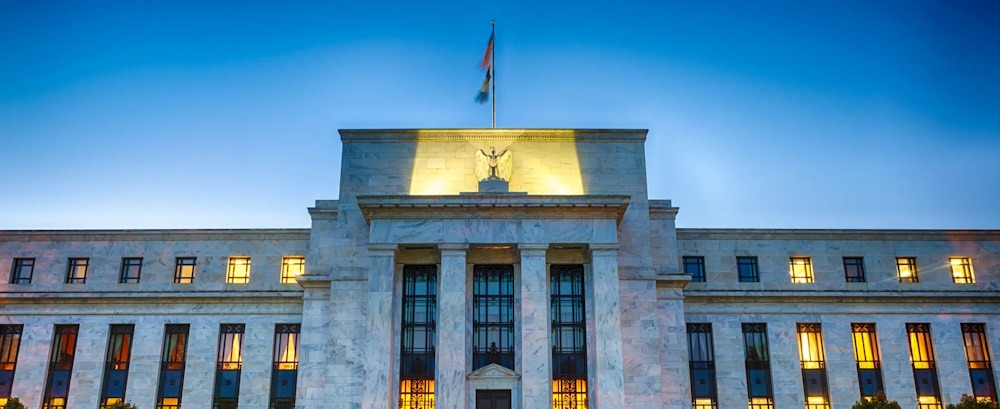
Dow futures experienced a slight increase on Friday following the release of soft inflation data, which bolstered expectations for a more accommodative monetary policy from the Federal Reserve in the upcoming year, despite Nike facing challenges with sales in China. The European Union has reached an agreement to extend additional financial assistance to Ukraine, while the Bank of Japan has implemented an increase in interest rates.
Dow futures experienced a slight uptick on Friday, building on the gains from the prior session, supported by subdued inflation data. However, the performance of sports retailer Nike has constrained the extent of these gains. At 03:30, the S&P 500 futures were up 17 points, or 0.3%. Nasdaq 100 futures increased by 105 points, or 0.4%, while Dow futures saw a rise of 7 points, or 0.1%. The primary indices concluded the trading session on a positive note Thursday, breaking a four-day decline, as a consumer inflation report that was less severe than anticipated instilled optimism among investors regarding the possibility of the Federal Reserve reducing interest rates further in 2026. That said, these benchmarks remain on track for a losing week, with the broad-based S&P 500 and the blue chip Dow Jones Industrial Average down approximately 0.8% and 1%, respectively. The tech-heavy NASDAQ Composite has experienced a decline of 0.8% thus far this week. The economic data calendar features the University of Michigan consumer sentiment index and existing home sales for November, as investors look for insights into the probable trajectory of the Fed’s monetary policy in the coming year. Nike will also be in the spotlight, following a significant decline in the sports apparel giant’s stock during premarket trading. The sports apparel giant experienced a decrease in revenue within its Greater China market during the fiscal second quarter, marking its sixth consecutive quarterly sales decline in the region. In the recent post-earnings call, CEO Elliott Hill emphasized the necessity to “reset our approach to the China marketplace,” a segment that represents approximately 15% of revenue.
European Union leaders have sanctioned an aid package amounting to €90 billion over the forthcoming two years, aimed at bolstering Ukraine’s defense. The decision entails borrowing the necessary funds instead of utilizing frozen Russian assets. EU governments engaged in discussions regarding the potential utilization of €210 billion in frozen Russian assets, predominantly located in Belgium, to facilitate a reparations loan for Ukraine. Ultimately, the leaders reached a consensus to increase funding via collective borrowing supported by the EU budget. “Ukraine will only repay this loan once Russia pays reparations,” stated EU Council President Antonio Costa on Friday. “The only way forward is a ceasefire and a negotiated peace.” Our political and financial support for Ukraine will remain steadfast. The agreement offers a financial safety net for Ukraine, simultaneously highlighting Europe’s efforts to influence U.S.-led peace talks aimed at resolving the conflict with Russia. Ukrainian President Volodymyr Zelenskyy expressed gratitude to the leaders of the European Union for the decision made by the European Council. He emphasized the significance of immobilizing Russian assets and highlighted that Ukraine has secured a financial guarantee for the upcoming years.
The Bank of Japan raised interest rates earlier in the session, as indicated by the central bank, and stated its readiness to increase rates further should economic conditions improve and inflation persist at elevated levels. The BOJ has increased its short-term benchmark interest rate to 0.75% from 0.5%, marking the highest level since 1995. The increase marks the Bank of Japan’s second adjustment of this nature in the current year, following a 25 basis points rise in January. The Bank of Japan indicated that it anticipates Japanese companies will persist in gradually increasing wages in 2026, alongside an expected enhancement in corporate profits. In conjunction with anticipations of a constrained labor market, the central bank indicated it was “highly likely” that wages and inflation will experience moderate increases. Nonetheless, the central bank observed that real interest rates continued to be “significantly negative,” and that financial conditions remained generally accommodative to bolster the Japanese economy. The BOJ indicated that real interest rates remain low, and it stands ready to increase interest rates and reduce monetary accommodation further should the Japanese economy evolve as anticipated.
The executive order signed by U.S. President Donald Trump seeks to facilitate the return of Americans to the moon by 2028, with the additional objective of establishing a permanent lunar outpost. Trump stated in the executive order that the United States must advance a space policy to enhance its security interests and “lay the foundation for a new space age.” The primary focus of Trump’s directive will be to facilitate the return of Americans to the moon by 2028 via NASA’s Artemis Program, while concurrently laying the groundwork for a permanent lunar outpost by 2030, as outlined in the order. The directive mandates that federal agencies, such as the Pentagon and intelligence organizations, formulate a security strategy for space, concurrently constraining the oversight of the White House’s principal space policy entity, the National Space Council. During his initial term, Trump indicated intentions to send Americans back to the moon by 2024.
Oil prices were poised for a consecutive weekly decline, driven by ongoing worries regarding a global supply surplus, alongside increasing optimism surrounding a potential peace agreement between Russia and Ukraine, which mitigated fears of supply interruptions stemming from a blockade of Venezuelan oil tankers. Brent futures experienced a decline of 0.1%, settling at $59.74 per barrel, while U.S. West Texas Intermediate crude futures also decreased by 0.1%, reaching $55.95 per barrel. Both benchmarks were poised to decline by more than 2% for the week. Expectations that global oil supply will persistently exceed demand through 2026 have exerted downward pressure on markets. This situation is driven by increasing output from non-OPEC producers and modest consumption growth in key economies, resulting in well-supplied inventories. The U.S. crude contract has experienced a decline exceeding 21% this year, marking its most significant downturn since 2018, whereas Brent has decreased by 20%, reflecting its poorest performance since 2020. On Tuesday, Trump declared a blockade aimed at tankers transporting Venezuelan oil that are already subject to U.S. sanctions, though the mechanisms for enforcing this announcement remain ambiguous and potentially limited in effectiveness. On Thursday, Trump expressed his belief that discussions aimed at concluding the war in Ukraine are “getting close to something,” coinciding with an upcoming U.S. meeting with Russian officials this weekend.