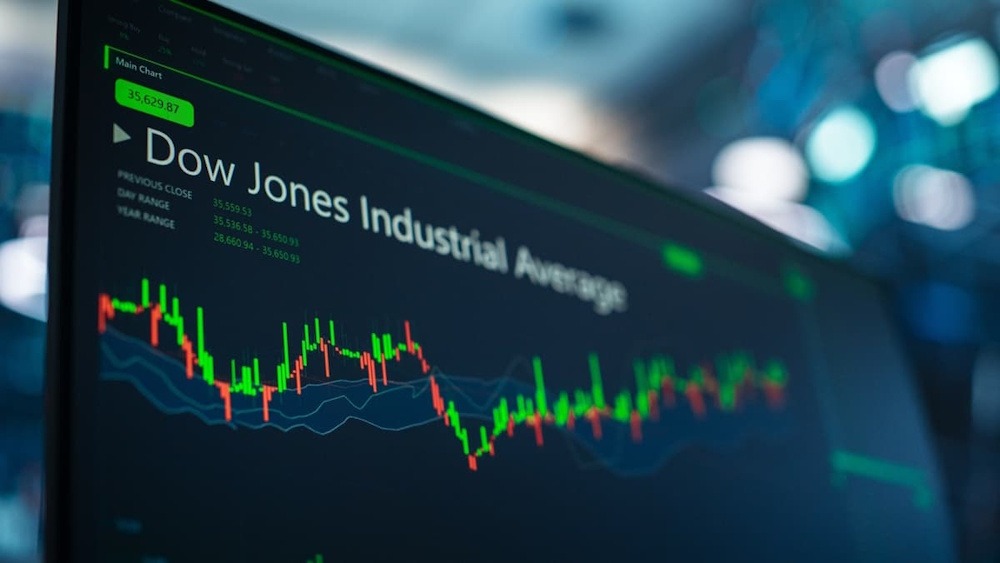
Dow Futures experience a slight increase, accompanied by a decline in oil prices, amid growing optimism regarding reports suggesting potential progress in negotiations aimed at achieving a permanent resolution to the Iran conflict. However, a U.S. blockade of Iranian ports has now entered its second day, further constraining oil shipping through the crucial Strait of Hormuz waterway. Attention is drawn to a surge of earnings reports from prominent U.S. banks, while a luxury giant acknowledges a sales impact stemming from the ongoing conflict in the Middle East.
Dow futures indicated an upward trajectory on Tuesday, supported by optimism regarding advancements in discussions between the U.S. and Iran, as investors prepared for a series of significant bank earnings reports. By 03:17, the contract had increased by 51 points, representing a 0.1% rise, had gained 10 points, also reflecting a 0.1% increase, and had risen by 72 points, equivalent to a 0.3% gain. The primary indices on Wall Street experienced an uptick in the previous session, as the initial letdown stemming from a weekend dialogue between Washington and Iran failing to produce an immediate accord diminished. U.S. President Donald Trump indicated that Iranian officials had reached out to the White House expressing a desire to “make a deal,” while asserting that Iran will not possess a nuclear weapon. “[W]hile the meeting was certainly disappointing, it was hardly catastrophic, and if one looks closely, Trump seems to be pivoting aggressively away from kinetic escalation,” analysts noted. Their perspective on the conflict is described as “relatively sanguine,” yet they acknowledge that the “economic fallout from what’s already occurred” may be “significant.” Simultaneously, a U.S. blockade of Iranian ports was implemented on Monday, which could further limit the already curtailed oil flows through the Strait of Hormuz. The International Energy Agency has indicated that oil prices, although decreased, continue to exceed the levels observed prior to the commencement of the joint U.S.-Israeli military action against Iran in late February. This suggests that the current prices may not fully incorporate the extent of the supply shock’s impact.
Tehran has condemned the U.S. blockade, which media reports indicate is backed by 15 American warships, characterizing it as a “act of piracy.” British maritime officials have observed that access has been limited for vessels seeking to enter or exit Iranian ports, as well as in coastal regions of the Persian Gulf, Gulf of Oman, and parts of the Arabian Sea. Nevertheless, diplomatic initiatives seem to have garnered a degree of momentum. The U.S. and Iran have maintained engagement with each other, and there appears to be progress toward establishing a permanent ceasefire agreement, according to reports. Pakistan has positioned itself as a significant intermediary in the dialogue between the U.S. and Iran, extending an invitation to facilitate a second round of negotiations before the conclusion of the current two-week ceasefire, as reported. Discussions commenced in Islamabad over the past weekend. In other developments, Israel and Lebanon are set to commence direct peace negotiations in Washington on Tuesday. Israeli air strikes on Hezbollah positions in Lebanon represent a significant obstacle to the tenuous cessation of hostilities between the United States and Iran.
However, the potential for progress towards a sustainable peace, coupled with the easing of travel restrictions through the Strait of Hormuz, contributed to a decline in oil prices, which fell below the $100 per barrel mark. The global benchmark decreased by 1.5% to $97.88 per barrel, while U.S. West Texas Intermediate crude futures saw a decline of 3.4% to $95.78 per barrel. The outlook for crude remains uncertain. In its initial evaluation of the repercussions of the Iran conflict published on Monday, OPEC reduced its projection for global oil demand in the second quarter by 500,000 barrels per day. Nevertheless, the decrease was not as significant as other forecasts indicated, and OPEC maintained its full-year outlook, implying that the consortium anticipates a recovery in oil consumption by late 2026.
Attention now shifts to the earnings calendar, as a number of Wall Street lending giants are set to report on Tuesday. They are poised to disclose quarterly returns prior to the commencement of U.S. trading, succeeded by competitors on Wednesday. Analysts expect that the outcomes from these banks will benefit from robust trading activity and investment banking fees, despite the ongoing economic uncertainty stemming from the Iran war. JPMorgan CEO Jamie Dimon cautioned earlier this month that the ongoing conflict poses a risk of triggering shocks in oil and commodity prices, which could sustain elevated inflation levels and push interest rates beyond current market projections. On Monday, a 19% increase in first-quarter profit was reported, attributed to volatile markets that supported a record three-month period in its trading and banking divisions.
In Europe, shares of LVMH declined in early trading after the Dior parent indicated that the conflict in the Middle East has reduced total group sales by at least 1%, undermining optimism regarding the potential for a continued recovery in the $400 billion luxury sector. Global quarterly sales at LVMH, the conglomerate associated with luxury brands such as Louis Vuitton and Bulgari jewellery, experienced a 1% increase, falling short of projections that anticipated a rise of 1.5%, based on estimates. LVMH’s finance chief Cecile Cabanis cautioned that “[w]hat we see today is still that demand is very much down” due to the disruption in shopping activity in the Middle East following the onset of the Iran war. Peer, the proprietor of the Gucci brand, is scheduled to announce results following the conclusion of European market trading on Tuesday.