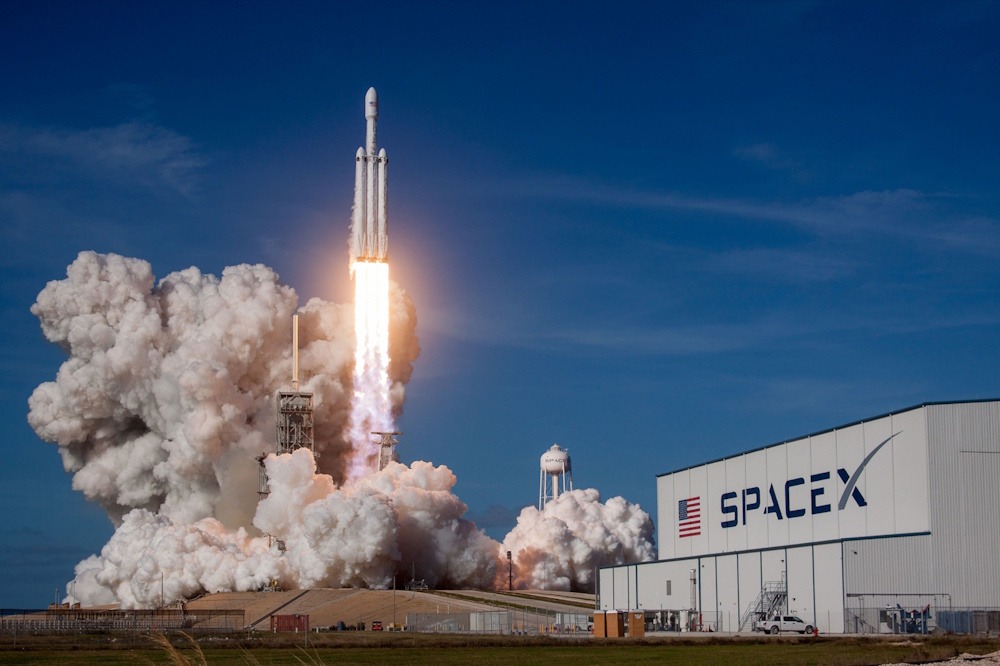
A surge of initial public offerings from large-cap companies this year may signify a peak in the market, according to strategists, who are drawing comparisons to the dot-com bubble of the late 1990s. SpaceX’s highly awaited initial public offering, as confirmed in a regulatory filing on Thursday and anticipated for June 12, has the potential to become the largest flotation in history. Elon Musk’s firm is aiming for a valuation of $1.75 trillion on the Nasdaq. Meanwhile, OpenAI and Anthropic have also declared their plans to pursue an initial public offering later this year. All three companies have yet to achieve an annual profit; however, Anthropic is anticipated to report its inaugural profitable quarter in the forthcoming earnings release. Analysts perceive the business models of each firm as inherently opaque, prompting some to advise caution for investors considering purchases at the IPO stage. “I see it as a market top,” John Blank told on Thursday. “It is widely recognised that the peak is often imminent, typically signalled by the occurrence of substantial initial public offerings.”
Back in 1999, we observed a similar phenomenon where individuals were eagerly seeking to launch these IPOs. SpaceX reported a net loss of $4.28 billion in the most recent quarter, following a loss of $4.94 billion in 2025. The Starlink division reported revenue of $3.26 billion in the most recent quarter, representing 69% of the overall total. The company’s space business incurred an operating loss of $619 million, whereas its AI unit reported a loss of $2.5 billion. Consequently, connectivity emerges as the sole profitable segment within the organization. Importantly, SpaceX stated in its S-1 filing on Thursday that it has “a history of net losses and may not achieve profitability in the future.” Much of its value hinges on the successful development of various technologies that are described as “novel and untested.”
Furthermore, SpaceX anticipates that it will “incur significant capital expenditures over a period of years” prior to achieving profitability with its AI products and services, as stated in the document. Dan Coatsworth remarked that “little is known” regarding SpaceX’s financials, attributed to its classification as a private entity, with Elon Musk holding 85% of the voting rights. Coatsworth highlighted the possibility of a staggering valuation as a potential risk to the upside. “A $1.75 trillion valuation would position SpaceX at 67 times sales, which is three times higher than Nvidia’s valuation based on its previous financial year and current share price,” he added. “It suggests that SpaceX’s valuation may exceed that of a sumptuous dish of dauphinoise potatoes.” SpaceX regards OpenAI as a significant competitor in the pursuit of supremacy in artificial intelligence, with Sam Altman’s organization also aiming to enter public markets by late 2026.
However, OpenAI has yet to achieve profitability, prompting some investors to raise concerns about the potential for broader repercussions in stock markets if the company persists in this trajectory. “If OpenAI and Anthropic can’t make money, this whole thing falls apart,” William de Gale told on Wednesday. “You could get OpenAI deciding to IPO itself in a couple of months, giving us the information that we realise it’s never going to make money, and that could be the end as well,” he added. “I’m not asserting that this is the situation, but it represents an alternative, significantly more expedited pathway to a limit on this growth.” Deutsche Bank issued a warning regarding transparency in a note released on Thursday. “It has yet to be seen how public markets will value OpenAI and its peers once they open up their financial statements to scrutiny and explain the still little-understood economics of their business models,” wrote Adrian Cox.