Dow Futures indicate a positive trajectory, as investors monitor a series of developments related to artificial intelligence and fluctuations in oil prices in anticipation of the upcoming trading week. Intense battles in Yemen between Iran-backed Houthis and Saudi-aligned forces leave control over the key Bab el-Mandeb Strait in the balance. Meanwhile, oil prices are experiencing a decline, fuelled by optimism regarding the potential for improved oil flows from the Middle East. U.S. Treasury Secretary Scott Bessent and Chinese Vise Premier He Lifeng engage in discussions focused on establishing an AI safety notification mechanism, amid rising concerns regarding the potential existential risks associated with the technology.
Dow futures exhibited an upward trend on Monday. By 02:58, the Dow futures contract had risen by 239 points, or 0.5%, S&P 500 futures had climbed by 39 points, or 0.5%, and Nasdaq 100 futures had gained 218 points, or 0.7%. The primary indices on Wall Street concluded the trading session on Friday with a mixed performance, as the benchmark S&P 500 and the technology-focused Nasdaq Composite recorded gains, while the blue-chip Dow Jones Industrial Average experienced a slight decline. U.S. Treasury yields increased across the curve, as expectations for an additional Federal Reserve interest rate hike throughout the remainder of 2026 remained largely unchanged. Bond yields typically exhibit an inverse relationship with prices. Analysts at Vital Knowledge observed that “a lot of the upside heavy lifting” during the session was accomplished by the so-called AI “pick-and-shovel stocks,” referring to companies whose products support the emerging technology, such as chipmakers. The analysts also noted that a separate rate hike from the Bank of Japan “wasn’t as hawkish as anticipated,” considering that two voting members of the central bank supported maintaining the current borrowing costs. However, the Japanese yen weakened after the decision, “rekindling worries about Japan needing to sell Treasuries to defend its currency,” the analysts noted.
Fighting in Yemen between Iran-backed Houthi militants and Saudi-aligned forces reportedly intensified over the weekend, as both sides compete for control over a crucial shipping chokepoint. Battles were waged in the mountainous territory of southwest Yemen on Sunday, according to a source. The latest development emerged as the Houthis strive to enhance their influence over the Bab el-Mandeb Strait, a constricted passage connecting the Gulf of Aden to the Red Sea. Saudi Arabia, a significant oil producer, has depended on the Bab el-Mandeb as an alternative route to transport crude to global markets since Iran has effectively closed the nearby Strait of Hormuz. The Houthis stated that they had launched missiles and drones at the Saudi capital of Riyadh and targeted oil facilities, as a response to Saudi air attacks within Yemen, according to the source.
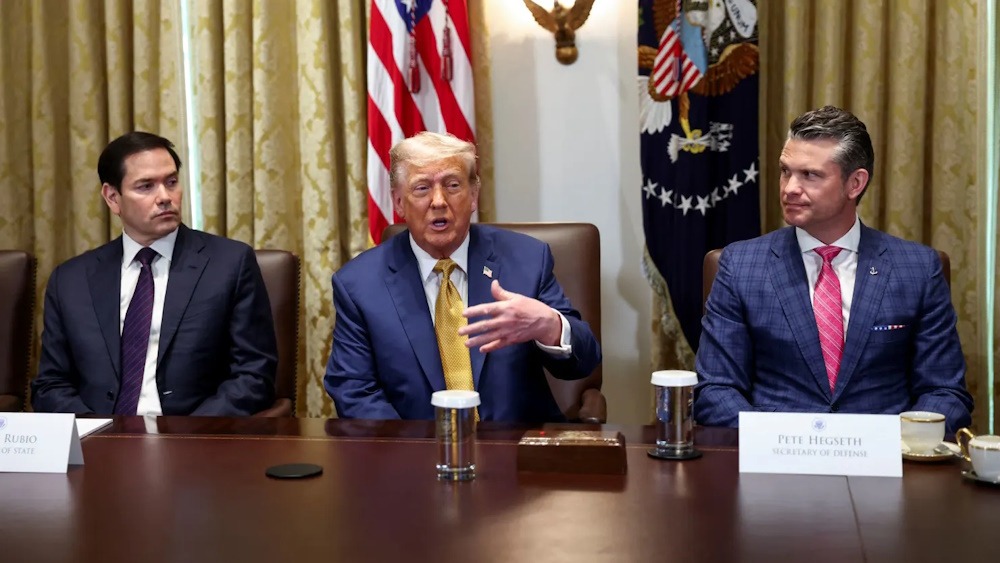
Meanwhile, the U.S. and Iran have issued new threats, indicating that the conflict, which has persisted since late February, shows no signs of de-escalation. President Donald Trump issued a warning to eliminate Iran’s leadership should Tehran fail to pursue a deal, while Iran’s military cautioned that it would respond to any renewed aggression. Despite the potential for ongoing supply disruptions stemming from the extended conflict, oil prices experienced a decline on Monday. Data indicated that Saudi oil exports had rebounded to slightly more than 4 million barrels per day in September, an increase from 2.4 million bpd in August. Riyadh is optimistic about the swift resumption of oil flows through its compromised east-west pipeline; however, analysts remain sceptical about the feasibility of this objective, as reported by various media outlets. The head of U.S. Central Command indicated that the volume of crude oil, cargo, and liquefied natural gas over the last two weeks surpassed levels recorded at any point in the past six months, according to reports. Against this backdrop, benchmark Brent crude futures declined by 2.1% to $101.66 a barrel. Last week, the contract briefly hovered around $110 a barrel.
U.S. Treasury Secretary Scott Bessent and Chinese Vise Premier He Lifeng concluded talks on Sunday that focused on the establishment of a potential AI safety notification mechanism. Bessent stated that the notification system would concentrate on national security threats, specifically. The proposal will be evaluated by Trump and Chinese President Xi Jinping at a highly anticipated summit later this week. AI safety has become a significant issue in recent times, prompted by alerts from numerous leading industry figures and researchers indicating that swift progress in the technology could threaten humanity. Unexpected hacks by AI swarms have raised concerns regarding the capacity of AI companies to retain control over their advanced models.
Not all have concurred with this evaluation, including Nvidia CEO Jensen Huang, who stated there is “0% chance” that humanity will face extinction in 2030, contrary to the speculations of certain figures within the AI industry. Huang stated that “scaring people is unnecessary. It is irresponsible.” Trump also minimised the growing concerns surrounding AI, indicating that the U.S. should support policies that will enable it to maintain a lead over China in AI development. Over the weekend, the president announced via social media his intention to appoint a new adviser tasked with establishing a “AI force.” And “We will not in any way hinder or stifle the Growth of this incredible Industry,” Trump wrote. “Rather, we will cherish it, help it, and watch over it, as it grows! However, we will also be looking for BAD, and we can do that, very easily, with our already existing Criminal and Civil Justice System.”