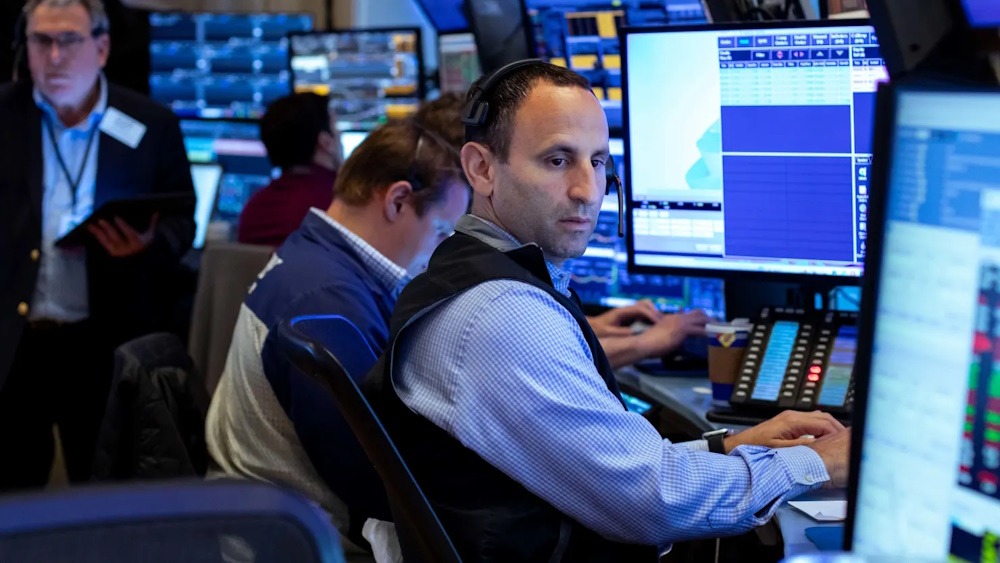
Dow Futures inch higher, following the advance of equities as the first full trading week of the fourth quarter commences. Gulf oil exports exceeded pre-war levels for approximately half of September, according to new data, despite the ongoing threat of attacks on tankers in the region. Constellation Brands is scheduled to announce its most recent quarterly results following the market close, and concurrently, U.S. trade data for August is anticipated to be published.
Dow futures indicated an upward trajectory on Tuesday. By 03:09, the Dow futures contract had increased by 170 points, representing a 0.3% rise, while S&P 500 futures saw a gain of 12 points, or 0.2%. Additionally, Nasdaq 100 futures experienced a slight uptick of 36 points, equivalent to 0.1%. The primary indices on Wall Street experienced an uptick on Monday, with the technology-focused Nasdaq Composite achieving a new record high close, supported by persistent excitement surrounding artificial intelligence. A decline in oil prices contributed to alleviating some concerns regarding ongoing energy-driven inflation. However, expectations that the Federal Reserve will forgo an interest rate hike this month, prior to increasing borrowing costs in December, remained largely unchanged. Meanwhile, a new set of data on services sector activity revealed that the prices paid by these companies in September reached a peak not seen since 2022, sustaining concerns regarding inflation. With the Federal Reserve poised to maintain its emphasis on controlling inflation, the benchmark U.S. 10-year Treasury yield reached its highest level in over twenty years. Investors were evaluating concerns that the difficulties in the U.S. bond market might be extending internationally, especially to France. Analysts at Deutsche Bank noted that there were “initial signs that the pressure on France was stabilizing, with a clear outperformance in French debt.”
Gulf oil exporters successfully exceeded pre-war production levels for approximately half of September, as indicated by shipping data. Kpler data indicated that the seven-day moving average for crude exports from the region reached 18.3 million barrels per day on September 30, with volumes surpassing pre-Iran war levels from late February for 14 consecutive days last month. The figures seemed to support optimism that crude flows have been successfully navigating out of the Gulf, notwithstanding the persistent risk of assaults on tankers and other commercial vessels. Iran effectively closed the Strait of Hormuz in the wake of the war, thereby obstructing a crucial maritime route that previously facilitated the passage of approximately one-fifth of the global oil and liquefied natural gas supply prior to the onset of hostilities. The conflict has since expanded into other parts of the Gulf, including Yemen, where Iran-backed Houthi militants and Saudi-aligned government forces are contending for control over the Bab el-Mandeb Strait, a vital shipping route. Analysts suggested that while the volume of oil exiting the Middle East is “fairly healthy considering all the turmoil,” the cost of taking a barrel of crude through Hormuz is “substantially higher than before the war.” As a result, prices paid by end customers will stay elevated for the foreseeable future, they added. Benchmark Brent crude futures were last trading lower by 0.8% at $99.53 a barrel.
On a relatively subdued earnings calendar, Constellation Brands is scheduled to report following the market’s close. Constellation, known for its brands such as Corona and Modelo Especial lager, is projected to report a comparable operating profit of $872.3 million alongside comparable net sales of $2.53 billion, based on estimates. In June, the company achieved a fiscal first-quarter profit that exceeded expectations and reaffirmed its adjusted profit per share forecast for fiscal 2027, projecting a range of $11.20 to $11.90. Analysts indicated that the FIFA World Cup football tournament, alongside a moderation in oil prices during that period, contributed to an increase in demand. Despite the broader alcohol market in the U.S. facing challenges, largely due to ongoing inflationary concerns, brewers have been taking measures to reduce their prices and concentrate their marketing efforts to bolster sales.
On Tuesday, a fresh set of U.S. trade figures for August is set to be released. In July, the U.S. trade deficit expanded as a result of robust import demand, positioning trade to potentially hinder broader economic growth in the third quarter. Data from the Commerce Department’s Bureau of Economic Analysis and Census Bureau indicated that the trade shortfall increased by 24.4% to $88.6 billion in July. Imports, in particular, rose by 2.8% to reach $399.3 billion. Domestic demand has experienced an uptick in recent months, driven by robust consumer spending alongside a surge in investments in artificial intelligence infrastructure.
Chinese artificial intelligence group DeepSeek is poised to secure a minimum of 80 billion yuan in a funding round supported by Tencent and CATL, sources indicated on Tuesday. The company had initially sought 50 billion yuan; however, investor demand exceeded initial expectations, according to sources familiar with the matter. The final tally could rise as high as 100 billion yuan, a source reported. DeepSeek, which gained prominence with its R1 open-source AI model in 2025, is considered one of China’s leading AI laboratories. Earlier reports had estimated DeepSeek’s valuation at approximately $74 billion. Investors are closely monitoring the AI startup’s intentions regarding a public listing.