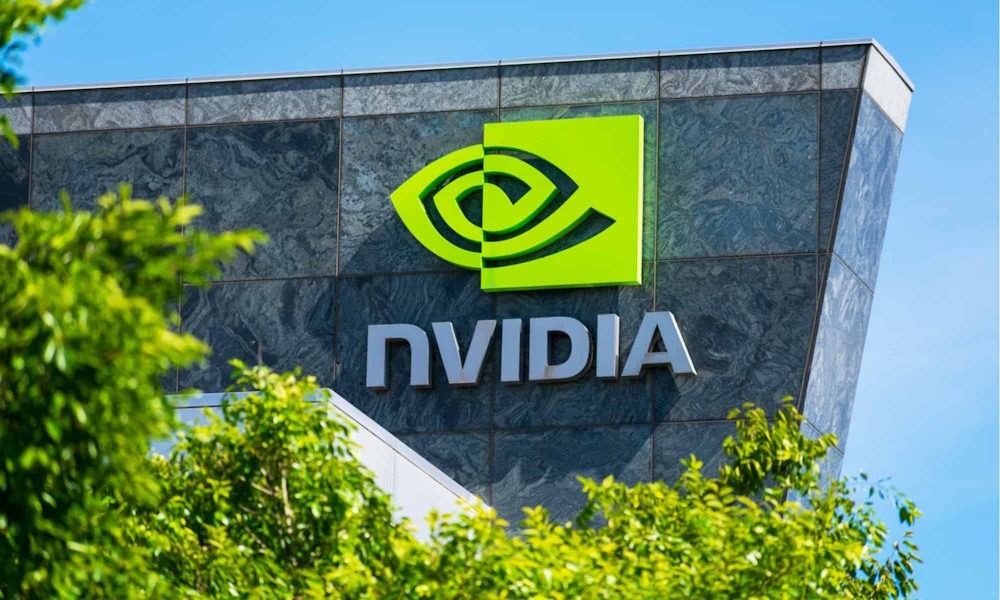
Dow Futures exhibit a slight drift as market participants anticipate the forthcoming inflation data release, while the implications of outgoing Nvidia CEO Jensen Huang’s resignation reverberate across global markets. Even as traders express concerns regarding Nvidia’s future, Cisco Systems and Applied Materials present optimistic forecasts that highlight the robust demand for artificial intelligence. Microsoft announced that it is continuing efforts to resolve issues with its Outlook and Teams services during an ongoing outage, while gold prices recover from a 13-month low.
Dow futures were attempting to establish a clear trajectory on Friday. By 05:17, Nasdaq 100 futures were largely stable, while S&P 500 futures had increased by 11 points, or 0.1%, and Dow futures had risen by 87 points, or 0.2%. Refer to it as key man risk. Nvidia shares slumped on Thursday after Huang, the prominent executive who led the company’s remarkable ascent to the forefront of the artificial intelligence boom, was ousted following reports of multiple extramarital affairs, including one with an alleged Chinese spy and another with an employee. Although Nvidia reduced its earlier losses significantly during the session, the stock experienced a decline of over 4%, resulting in a loss of nearly a trillion dollars in value this month alone. Analysts were engaged in a thorough evaluation of Nvidia’s potential recovery following Huang’s departure, with considerable concern regarding the absence of robust succession planning at a firm that not only designs advanced chips essential for AI systems but also acts as a central bank supporting its clientele. U.S. lawmakers have signalled their intention to initiate investigations into Huang’s connections with companies allegedly engaged in the smuggling of Nvidia’s high-end processors into China, in violation of strict U.S. export regulations. Senate Banking Committee Chairman Tim Scott has dispatched individual letters to Huang and Commerce Secretary Howard Lutnick, urging both to provide testimony before lawmakers in December, as reported by Politico. Meanwhile, Nvidia has initiated a search for Huang’s successor, with President Donald Trump suggesting former Apple CEO Tim Cook as a potential candidate for the position. Currently, CFO Colette Kress is charged with the responsibility of stabilising the organization on an interim basis. Kress will need to establish her footing promptly: Nvidia is scheduled to announce its most recent quarterly earnings next week. While Wall Street reacted with trepidation to the implications of the Nvidia controversy for the broader economy, overall, stocks did not undergo the significant selloff observed in the previous week. Yet sentiment appears to remain pessimistic. A metric of Asian equities declined, while bonds in the U.S., Japan, and Australia experienced a pullback. A rise in oil prices, spurred by Trump’s claim that the U.S. no longer needs a peace deal with Iran, has not contributed positively to the situation.
Even as Nvidia experiences challenges, the outlook for AI has demonstrated signs of resilience. A notable example has emerged from Cisco Systems. The world’s largest manufacturer of networking gear, Cisco provided an optimistic current-quarter sales forecast that exceeded analysts’ expectations and raised its full-year guidance. These forecasts, along with fiscal second-quarter sales that exceeded expectations at approximately $18.1 billion, highlighted robust demand for the equipment driving data centers. Cisco has been expediting its efforts to align its services with the demands of the AI industry while simultaneously addressing competition from firms such as Hewlett Packard Enterprise and Broadcom. Order growth remained at 21% compared to the previous year, a decline from 35% in the prior quarter, which may temper some of the optimism regarding Cisco’s future outlook. Meanwhile, in the backdrop, there are significant victories in the U.S. midterm elections for Democratic candidates who have pledged to curtail the swift expansion of data centers. Shares of Cisco experienced a decline during after-hours trading.
Applied Materials provided a positive outlook for revenue in the current quarter, anticipating that the competition to acquire AI chips will sustain demand for its semiconductor manufacturing equipment. California-based Applied anticipates fiscal first-quarter revenue of approximately $11.10 billion, with a margin of plus or minus $500 million, in contrast to analysts’ expectations of $10.89 billion, as per LSEG data. Fourth-quarter adjusted profit of $4.16 per share exceeded expectations, driven in part by a 64% increase in revenue to $8 billion within the group’s semiconductor systems unit. CEO Gary Dickerson informed analysts during a post-earnings call that 2027 is expected to be “another record year for the market and Applied.” Shares of Applied experienced a minor decline in after-hours trading; however, they have surged by over 41% year-to-date.
In other developments, Microsoft announced that it continues to address issues with its Outlook and Teams services, as a significant outage affecting several of the company’s widely used platforms extended into a second day. Microsoft stated in its most recent update that it had implemented additional mitigation measures to restore services across its 365 suite, but acknowledged that it was facing challenges that hindered the implementation of certain changes. “We’ve monitored the status of the changes applied to improve serviceability and confirmed they’re not taking as expected,” Microsoft said in a social media post. User reports indicated disruptions throughout Microsoft365, with significant effects observed on Teams and Outlook. Services experienced disruptions on a global scale, spanning from the Asia-Pacific region to the Americas. Shares of Microsoft experienced a decline in off-market trading.
Gold prices regained their footing above $3,900 an ounce on Friday, bouncing back from a 13-month low reached in the prior session. However, the precious metal continues to face headwinds from increasing Treasury yields, a robust dollar, and anticipations of additional interest rate hikes by the Federal Reserve. Spot gold recently increased by 0.4% to $3,902.22 per ounce; however, it has experienced a decline of over 4% for the week to date. The selling pressure has intensified since Tuesday, when stronger-than-expected U.S. consumer inflation data and hawkish comments from Fed officials prompted investors to reassess the interest-rate outlook. Bets on a potentially larger-than-normal half-point rate rise next month have emerged. Attention now shifts to the forthcoming release of the U.S. producer-price index on Friday, which may offer new perspectives on the trajectory of U.S. inflation.