Dow Futures are experiencing a rally as we approach a holiday-shortened trading week, which is expected to be dominated by concerns regarding the artificial intelligence sector that led to a significant decline in technology stocks the previous week. Treasury Secretary Scott Bessent indicates that the U.S. is seeking clarity regarding Nvidia’s chip sales to China during the tenure of former CEO Jensen Huang, while Wall Street strategist Ed Yardeni has once more reduced his year-end forecast for the S&P 500.
U.S. stock futures experienced a rebound on Monday. By 01:20, the Nasdaq 100 futures contract had increased by 740 points, reflecting a rise of 2.9%. Meanwhile, S&P 500 futures saw an addition of 143 points, corresponding to a 2.1% gain, and Dow futures experienced a gain of 680 points, equating to a 1.4% increase. Jittery is perhaps an apt word to describe the current sentiment in financial markets after the Nasdaq Composite cratered by more than 5% on Friday, marking the worst week for the tech-heavy index since the 2020 COVID-19 crisis. While there is ongoing discussion regarding the appropriateness of the term “bubble” in relation to the upheaval surrounding AI, it appears that the once high-flying enthusiasm for this emerging technology, which has supported a four-year bull market, may be experiencing a gradual deflation. Concerns have proliferated regarding the prospective returns from substantial, at times debt-driven, investments in AI infrastructure, alongside heightened regulation on the export of advanced chips following the unexpected resignation of Nvidia CEO Jensen Huang. Solid earnings from Nvidia last week did not alleviate concerns regarding the chip designer’s future following the departure of Huang, who transformed the company into a crucial entity supplying essential components for AI systems and even financed some of its own customers.
Anthropic’s record-smashing initial public offering did little to dispel the uncertainties surrounding AI. The Claude chatbot maker’s initial surge following the first-time share sale has diminished, yet the stock continues to trade above its IPO price. Traders gravitated toward the relative safety of U.S. Treasuries, as the benchmark 10-year bond yield retreated below 5% once again. The rate-sensitive 2-year yield experienced its most significant decline since August 2025, as investors ceased to fully anticipate a minimum quarter-point interest rate increase at the Federal Reserve’s December meeting. The yields experienced an uptick on Monday, influenced by the rise in stock futures. U.S. Treasury Secretary Scott Bessent warned the Federal Reserve that excessively tightening monetary policy could jeopardise the American economy, highlighting the decline in financial markets.
On Sunday, Bessent suggested a deepening investigation into Nvidia’s interactions with China, an aspect of the business that has faced increasing examination following disclosures that Huang was involved in a relationship with an executive believed to have connections to Chinese intelligence. In an interview, Bessent indicated that the government intends to investigate Nvidia’s chip sales to China and will identify the individuals responsible for compliance within the company. “We’ve been in touch with the temporary management, with the lead directors, with their lawyers, and we do need answers,” Bessent said. He added that he had confidence Nvidia’s board would deliver a “very fulsome” response. Huang and Nvidia’s general counsel are scheduled to testify before U.S. Congressional committees early next month, as the FBI has initiated investigations into the matter. Investors have initiated a class-action lawsuit against Nvidia. Despite U.S. President Donald Trump’s support for Huang’s return as CEO, the White House has responded to the ongoing controversy by imposing stricter limitations on the remote access that Chinese companies have to advanced chips produced by firms such as Nvidia.
Strategist Ed Yardeni highlighted in a research note over the weekend that the stricter regulations have adversely affected chipmaking stocks, prompting him to revise his forecast for the benchmark S&P 500 at year-end for the second time in approximately two months. Yardeni indicated that he now anticipates the index, which has entered a technical correction, concluding 2026 at 7,500 points, a revision from the previously adjusted target of 7,900. The S&P 500 concluded the trading session on Friday at 6,910.39. Since reaching a record high on October 6, the average has declined by 11.6%. “We expected a pullback. It has turned into a correction,” Yardeni said. In particular, he highlighted fears that tighter export controls could lower demand for chips, causing a price drop that sparks a chain reaction of falling valuation multiples, slower earnings growth, “or even an outright drop in earnings.”
Although the quarterly earnings season has effectively concluded, a few reports are still anticipated to be released this week. Following the closing bell on Monday, Hewlett Packard is set to disclose its fiscal fourth-quarter returns. Earlier this year, the company raised its annual forecasts, attributing the increase to AI-driven demand for its powerful servers. However, in an interview, finance chief Marie Myers warned of a global bottleneck in memory chips, saying “demand is far outstripping supply.” For its fiscal 2027, HPE projected revenue growth of 13% to 17% and adjusted earnings per share growth of 16% to 20%.
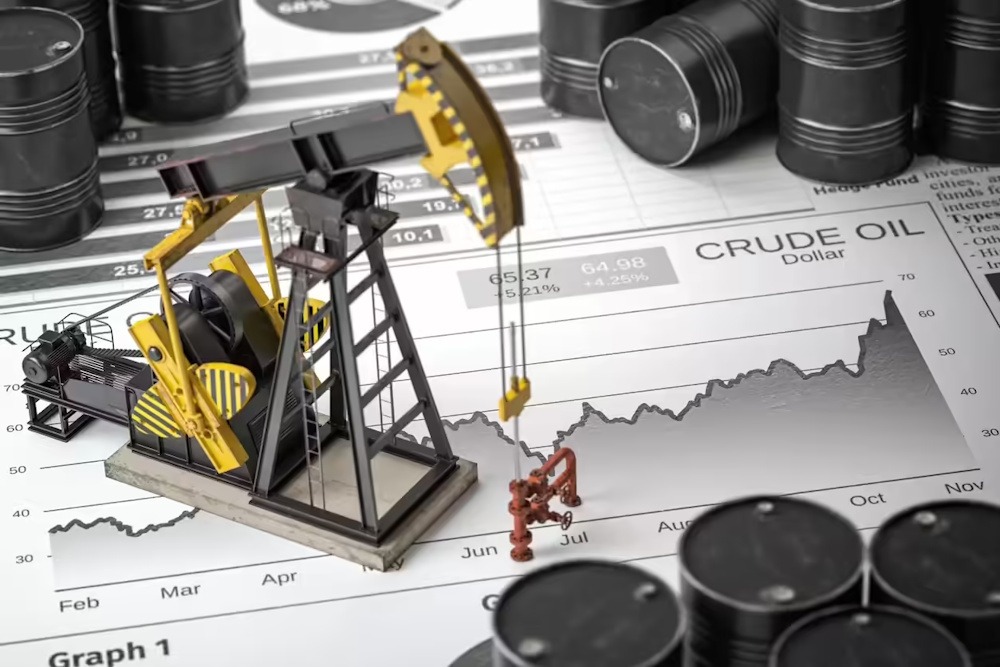
Oil prices fluctuated near the equilibrium as traders assessed the implications of renewed assaults on commercial shipping and energy infrastructure throughout the Persian Gulf, juxtaposed with indications of robust crude exports. Benchmark Brent crude futures remained just under $93 a barrel, while U.S. West Texas Intermediate traded near $83 a barrel. Both benchmarks experienced a decline last week, with Brent decreasing by 4% and WTI dropping by 5%. Iran-aligned Houthi militants in Yemen asserted responsibility for an attack on a Saudi Arabian oil refinery over the weekend. Concurrently, the United Kingdom Maritime Trade Operations agency documented several incidents involving commercial vessels in the Gulf and adjacent to the Strait of Hormuz. Despite expectations of a growing global supply surplus, the latest developments highlighted the persistent risks to energy infrastructure and shipping, even amid attempts to negotiate a resolution to the U.S.-Israeli conflict with Iran.