Dow Futures show a slight increase as investors assess the implications of a diminishing recovery in the bond market. Markets will have the opportunity to analyse a new set of U.S. business activity data, as discount retailer Ross Stores increases its annual profit forecast and the U.S. announces it will implement the “toughest sanctions in history” on Iran.
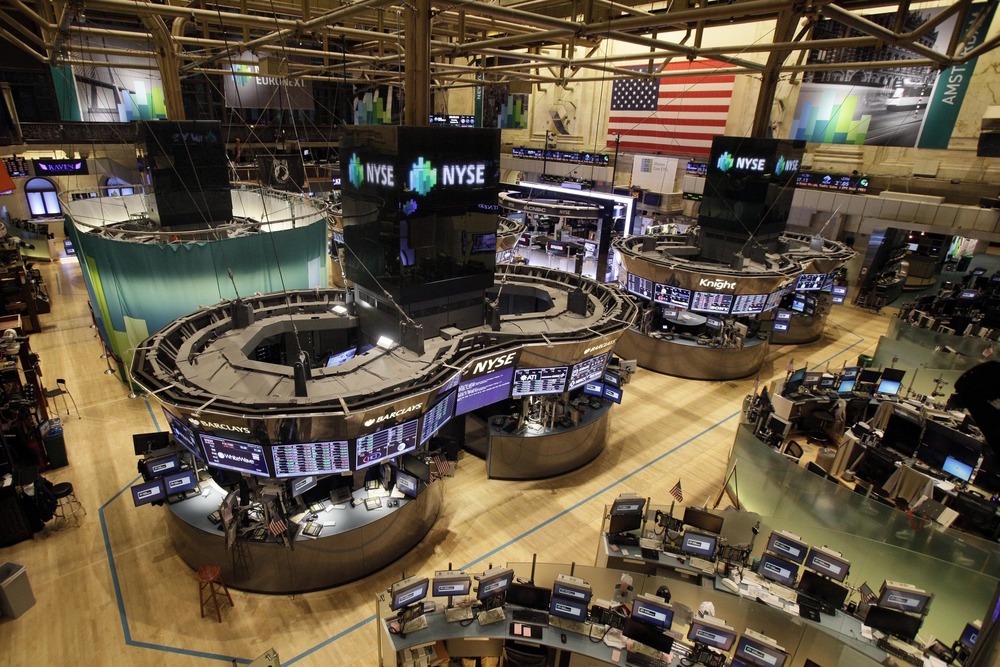
Dow futures indicated a slight increase on Friday, following a waning bond market rally that led to a decline in equities during the previous session. By 03:11, the futures contract for the Dow had gained 65 points, or 0.1%, while S&P 500 futures had risen by 14 points, or 0.2%, and Nasdaq 100 futures had increased by 115 points, or 0.4%. The primary indices on Wall Street experienced a decline on Thursday, influenced by a resurgence in government bond yields after a significant drop earlier in the week. On Wednesday, the U.S. Treasury Department pledged to buy back more long-dated debt, briefly fuelling relief among investors wary of a surge in the yield on 30-year U.S. government bonds to nearly a two-decade high. Yields typically exhibit an inverse relationship with bond prices. However, that recovery was fleeting, as analysts observed that remarks from U.S. Treasury Secretary Scott Bessent during an interview failed to instill enduring confidence in the market. They added that Bessent’s statements were even potentially “counterproductive by conveying both panic and powerlessness” against a slew of broader forces driving up bond yields, such as an Iran war-driven energy shock, ballooning fiscal deficits, and soaring artificial intelligence infrastructure spending. Disappointing returns from big-box retail giant Walmart have also impacted sentiment, according to analysts. Traders have expressed concerns regarding the disappointing outcomes from the broader retail sector this week, and the potential implications these may have for the condition of the American consumer.
On the economic data front, investors will have the opportunity to analyse the preliminary August readings of U.S. business activity this coming Friday. Thus far, this data has demonstrated a notable resilience amidst a surge in oil prices triggered by the conflict in Iran, alongside speculations regarding potential interest rate increases by central banks in reaction to these developments. In July, the composite purchasing managers’ index, which aggregates data from both the manufacturing and services sectors, attained its peak level since the beginning of the year in the U.S., as observed by analysts. August’s U.S. services PMI from S&P Global is projected to decline marginally to 53.9, whereas manufacturing is anticipated to rise slightly to 54.0. A level above 50 indicates expansion.
Ross Stores shares advanced by more than 8% in extended hours trading on Friday following the discount retail chain’s upward revision of its profit forecast and the achievement of second-quarter earnings that exceeded expectations. Similar to competitors Burlington and TJX, along with digital challengers such as fast-fashion retailer Shein and e-commerce leader Amazon, Ross has been striving to broaden its discount offerings in order to appeal to customers concerned about inflation. Shoppers have increasingly gravitated toward value options, distancing themselves from higher-priced department stores and speciality apparel brands, as a strategy to alleviate the potential effects of rising cost-of-living pressures. CEO Jim Conroy informed investors during a post-earnings call that there has been an increase in customer spending across various merchandise categories and regions, with notable growth in Ross’ home and cosmetics divisions. Against this backdrop, Ross indicated it now anticipates annual per-share income of $8.61 to $8.77, an increase from the prior guidance of $7.50 to $7.74. Quarterly adjusted profit arrived at $2.06 per share, surpassing expectations of $1.94, as per LSEG estimates.
Elsewhere, Bessent, the U.S. Treasury Secretary, has stated that Washington will implement stringent sanctions on Iran, reinforcing President Donald Trump’s threats to engage in economic warfare against Tehran. “It is a one-two punch. We have the blockade, and we are going to have the toughest sanctions in history,” Bessent said in an interview, adding that he will hold a press conference on Monday to outline the details of the plan. Bessent also urged China to align with the sanctions, despite Beijing’s strong opposition to proposals for additional restrictions on Iran. Bessent’s remarks follow Trump’s warning to Iran on Wednesday about “economic warfare and isolation on an unprecedented scale,” asserting that the nation is in a precarious position after enduring months of U.S. military and economic pressure. Iran largely dismissed Trump’s threats, with Foreign Minister Abbas Araghchi accusing him of attempting to divert attention from domestic issues, chiefly rising U.S. debt.
Oil prices declined following Bessent’s threat, retreating modestly from one-month peaks. Crude was on track for a second consecutive week of significant gains, as the standoff between the U.S. and Iran regarding the Strait of Hormuz exhibited minimal signs of resolution. Brent oil futures, the benchmark for global oil prices, were last down by 0.4% to $93.41 a barrel, while West Texas Intermediate crude futures had dropped by 0.6% to $86.36 a barrel. The Brent contract was poised to increase by over 5% this week.