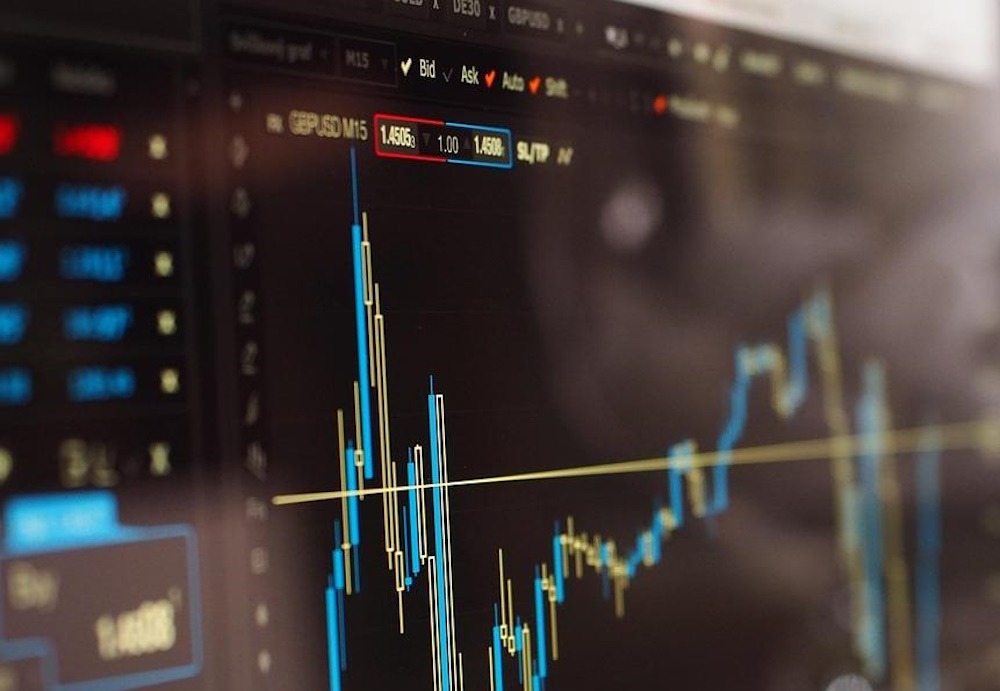
Dow Futures indicate a downward trend as a significant two-day Federal Reserve policy meeting approaches. Concurrently, persistent tensions in the Gulf are sustaining oil prices above $105 per barrel, contributing to an increase in government bond yields. Another artificial intelligence researcher issues a caution regarding the technology’s implications for humanity, while robust foreign demand for exports supports Chinese industrial production in August.
Dow futures declined on Tuesday as investors braced for the commencement of the Federal Reserve’s policy meeting while evaluating the escalating conflict in the Middle East. By 03:20, the Dow futures contract had decreased by 266 points, or 0.5%, the S&P 500 futures had declined by 28 points, or 0.4%, and the Nasdaq 100 futures had fallen by 90 points, or 0.3%. The primary indices on Wall Street experienced a decline in the last session, influenced in part by renewed concerns surrounding artificial intelligence, prompted by a request from leading figures in the AI sector to decelerate the advancement of this emerging technology. Chipmaking stocks experienced a notable decline, as the Philadelphia semiconductor index recorded its most significant drop since July. Oil prices also surged following Saudi Arabia’s closure of its critical east-west pipeline, which serves as an alternative to the effectively shuttered Strait of Hormuz. Concerns regarding persistent energy-induced inflation have led to an increase in government bond yields, notably the benchmark 10-year U.S. Treasury yield, which has surpassed the 5% mark for the first time since 2023. “[I]t was another session where September lived up to its reputation as the worst month of the year for asset performance, with bonds and equities continuing to struggle,” analysts said in a note. They added that they will be closely watching U.S. Treasury Secretary Scott Bessent’s testimony to the House Financial Services Committee later today “to see if he tries to lean in some credible way against the rising tide of bond yields.”
Attention is now shifting to the Federal Reserve, which is anticipated to increase interest rates at the conclusion of its latest meeting on Wednesday. Policymakers at the U.S. central bank have indicated a necessity to address inflationary pressures, particularly as the continued conflict in the Middle East restricts oil supplies and elevates energy prices. There is now a roughly 92% probability that the Federal Reserve will choose to increase rates by a quarter of a percentage point this week, resulting in borrowing costs rising to a range of 3.75% to 4%, according to CME FedWatch. The Deutsche Bank analysts also noted that 90 basis points of hikes are now priced in by the Fed’s June 2027 meeting, up by 2 basis points from the prior day – a recalibration that contributed to the uptick in Treasury yields. Recent data has indicated persistent inflation and a robust labour market, two trends that may provide the Federal Reserve with greater latitude to increase interest rates. In theory, such an increase could mitigate inflation, though it carries the potential to adversely affect the job market and the overall economy.
Oil prices experienced a significant increase on Tuesday, continuing their recent upward trend as additional Houthi attacks on Saudi Arabia heightened worries regarding potential supply disruptions in the Middle East. Discussions between Iran and Gulf nations regarding the reopening of the Strait of Hormuz continue to be stalled, heightening apprehensions about global supply chains and sustaining the risk premium associated with crude oil. On Monday, Yemen’s Iran-aligned Houthis escalated their offensive against Saudi Arabia, solidifying their strategic positions along the Red Sea. These positions enabled the group to execute additional assaults on maritime traffic via the Bab el-Mandeb Strait, jeopardising oil transportation in the area. The Houthis have targeted multiple locations within Saudi Arabia, thereby exacerbating the risks to the nation’s oil exports following last week’s attacks that rendered Riyadh’s east-west pipeline inoperative. The Houthi offensive has introduced a new dimension to the Middle East conflict, prompting analysts to project that an additional 4% to 5% of global supplies may face disruption.
An artificial intelligence researcher who recently resigned from Google DeepMind stated on Monday that the technology possesses the potential to inflict significant harm on humanity. Bilal Chughtai, formerly a research engineer at Google’s Deepmind unit, articulated apprehensions regarding the future of AI, suggesting that superintelligent systems, which could significantly surpass human capabilities, may emerge within the next few years and pose potential risks. “I earnestly believe that AI has the potential to kill us all, and that we might be running out of time to avoid this outcome,” Bilal said in posts on social media. The warning arises as various AI researchers have highlighted the risks associated with unrestricted AI development and its potential consequences for humanity. Former Anthropic researcher Jacob Coxon stated last week that he resigned partly due to the potential risks associated with AI. Over the weekend, Anthropic CEO Dario Amodei published an essay advocating for increased regulation of AI models and a slowdown in the pace of development.
Chinese industrial production experienced a greater-than-anticipated increase in August, driven by robust foreign demand for exports, which supported domestic production amid a general decline in economic conditions. Industrial production experienced a year-on-year increase of 5.2% in August, surpassing expectations of 4.8% and the previous month’s figure of 4.5%. The reading was primarily driven by strong international demand for Chinese goods, particularly in categories such as electronic components, batteries, and networking equipment. However, fixed asset investment in the year to August decreased by 7.2%, compared to expectations of a decline of 7.0%. The metric, a crucial indicator of both private and public capital expenditure in China, has remained in negative territory since April.