Dow Futures are experiencing a modest increase as investors prepare for an important decision regarding interest rates from the Federal Reserve. Markets anticipate an increase in interest rates by the central bank and will closely monitor any indications from Fed Chair Kevin Warsh regarding potential further hikes in the near future. A two-day rally in crude pauses after an unexpected increase in U.S. inventories, while concerns about potential disruptions in Gulf supply persist. Elsewhere, as the debate over AI safety intensifies, a new report indicates that OpenAI has engaged in discussions regarding a new funding round that would appraise the ChatGPT creator at $1.2 trillion ahead of its anticipated initial public offering.
Dow futures indicated an upward trend in anticipation of a significant Federal Reserve interest rate decision, which has the potential to shape the direction of monetary policy for the remainder of 2026. By 03:12, the futures contract for the Dow had risen by 129 points, or 0.3%, while S&P 500 futures had gained 21 points, also 0.3%, and Nasdaq 100 futures had moved up by 145 points, or 0.5%. The primary indices on Wall Street experienced a decline in the last session, influenced by a surge in benchmark U.S. government bond yields approaching levels not seen in nearly two decades. Driving the selloff in the debt market was a simultaneous increase in oil prices, attributed to an escalating conflict in the Middle East. This, in turn, has intensified concerns regarding a sustained, energy-induced increase in inflation and the potential for subsequent interest rate increases. Analysts at Vital Knowledge indicated that a “doom loop” has emerged between oil prices and yields. “The former’s unrelenting rally pulls the latter higher, undermining risk sentiment and forcing central banks to tighten policy,” the analysts said in a note.
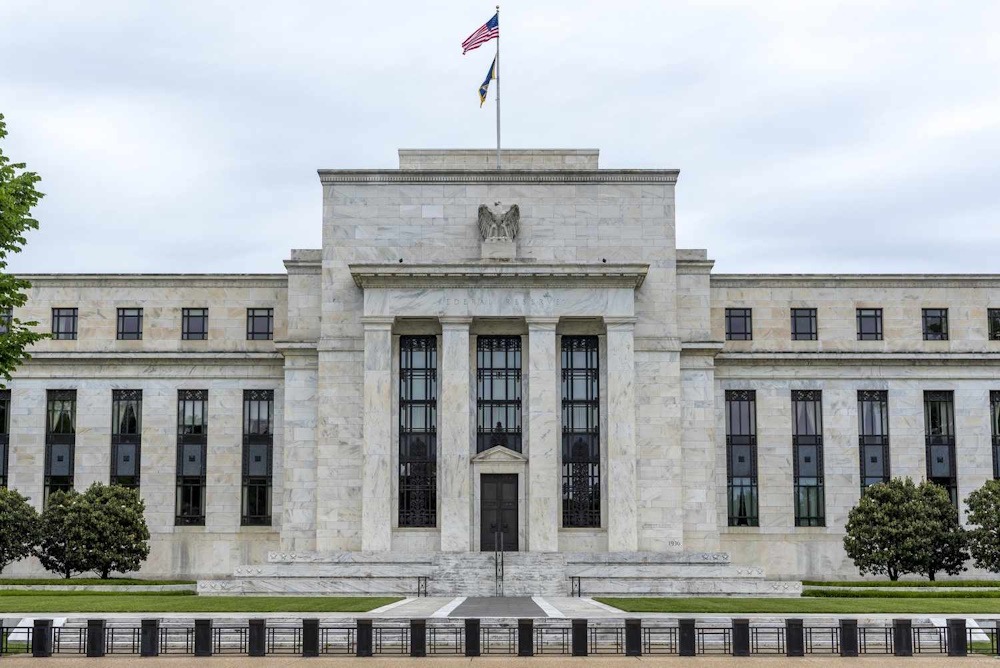
Attention now shifts to the Federal Reserve, as markets widely expect the central bank to raise interest rates at the conclusion of its latest two-day meeting later today. A quarter-point increase would elevate the key Fed funds rate to a range of 3.75% to 4%. Confronted with indications of persistent inflation and a robust labour market, members of the rate-setting Federal Open Market Committee are perceived to have sufficient justification to increase borrowing costs – although this action could provoke discontent from President Donald Trump, who has consistently supported rate reductions to stimulate economic growth. Theoretically, elevated rates can suppress price increases, although this comes with the potential drawback of impacting growth and employment levels. With the decision largely anticipated, investors are expected to closely monitor remarks from Fed Chair Kevin Warsh, as they seek to determine whether this represents a singular increase or the initiation of a tightening cycle. Don’t anticipate significant direction from Warsh, however: He has consistently opposed offering a comprehensive rate outlook to the markets.
Oil prices experienced a decline on Wednesday, influenced by an unexpectedly significant increase in U.S. inventories, which provided some relief. However, crude oil continued to trade above $100 a barrel as market participants accounted for ongoing supply disruptions in the Gulf region. Brent crude futures, the global oil benchmark, experienced a decline of 1.2%, settling at $107.47 a barrel by 03:06. Meanwhile, West Texas Intermediate crude futures fell by 1.8%, reaching $103.94 a barrel. Both contracts have advanced by at least 5% over the past week, primarily influenced by signals that the Middle East conflict is broadening beyond Iran and the Strait of Hormuz. Crucially, Iran-backed Houthi militants have executed assaults on the significant oil producer Saudi Arabia, compelling the kingdom to halt operations on a crucial east-west pipeline that had served as an alternative route for transporting crude outside of Hormuz. Saudi Arabia has also halted loadings at its Yanbu port; however, it has provided additional loadings to Asian refiners via ship-to-ship transfers off Oman’s Sohar port, according to a source. Meanwhile, the Houthis have consolidated their control over regions in western Yemen, thereby enhancing their leverage over the Bab el-Mandeb Strait-an essential chokepoint for oil shipping from the Gulf to global markets, alongside Hormuz.
Meta CEO Mark Zuckerberg has stated that artificial intelligence developers ought to depend on independent safety evaluators for their models, rather than hindering progress. Zuckerberg stated in a social media post on Tuesday evening that AI labs lacking a focus on “alignment” with users will lag behind, and emphasised that developers ought to involve independent evaluators and advisers. “There is a lot of debate about slowing progress on capabilities until alignment catches up. My view is that trust and alignment are quickly becoming the most important capabilities that will differentiate agents and models,” Zuckerberg said. He added that Meta had delayed shipping its latest Muse AI model to focus on safety and security. Zuckerberg’s remarks follow an essay by Anthropic CEO Dario Amodei, who advocates for a slowdown in AI development in light of the potential dangers associated with the rapidly advancing technology. Executives from the AI industry, such as OpenAI CEO Sam Altman and xAI leader Elon Musk, expressed their support for Amodei’s message. However, figures like Nvidia CEO Jensen Huang have downplayed safety concerns, whereas President Trump contended that the United States must not lag behind China in the competition to advance AI.
OpenAI has engaged in discussions regarding a new funding round that would value the company at $1.2 trillion, subsequent to the launch of its latest advanced AI model, as reported by sources. Citing a source with knowledge of the situation, the source reported that, if finalised, the new round would occur prior to OpenAI’s highly awaited public launch. Altman has dismissed the possibility of an IPO this year, referencing concerns regarding AI safety. In March, OpenAI achieved a valuation of $852 billion following the completion of a financing round amounting to $122 billion, which attracted prominent technology firms such as SoftBank, Amazon, and Nvidia. The company has since reported that its active users have reached one billion, while over 200 million businesses are utilising its AI products. According to the source, OpenAI generated $6.7 billion in revenue in the three months to June, compared to $5.7 billion in the first quarter; however, a decline in operating margin has tempered expectations regarding the firm’s potential for profitability prior to the IPO.