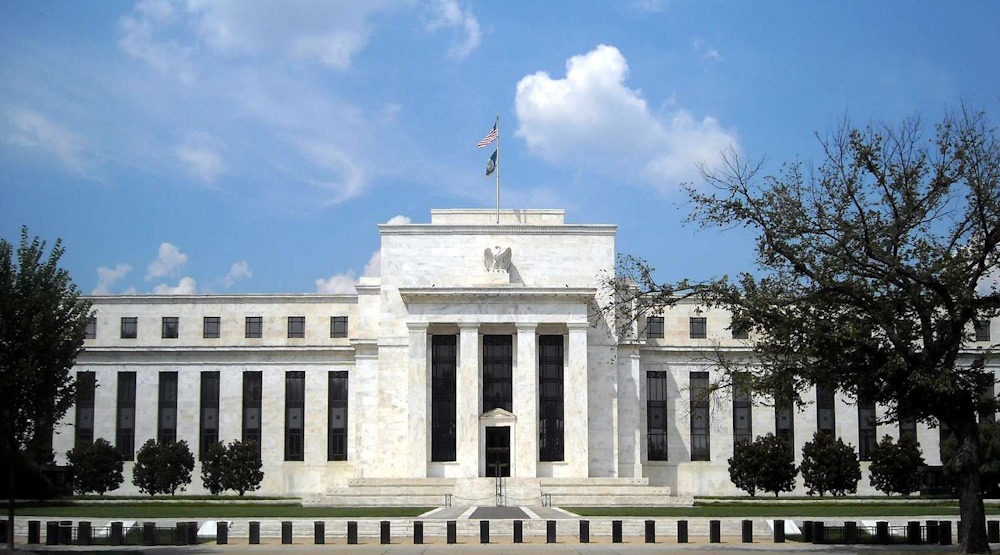
On September 16, shortly after the Federal Reserve raised interest rates, Colby Smith of The New York Times asked Fed Chair Kevin Warsh about the usual script. “When the Fed starts raising rates, it generally follows with a sequence of hikes,” Smith said at the press conference, before asking whether anything made this time different. Warsh answered with a refusal. “This won’t surprise you, I’m not in the forward guidance business.”
The decision itself was a quarter-point increase, approved 12-0, that lifted the federal funds target range to 3.75% to 4%. It ended nine months at 3.50% to 3.75%, a range the Committee reached with a cut on December 10, 2025, and then left alone at five straight meetings. At the last of those, seven weeks before the increase, three officials had already dissented in favor of a quarter-point rise.
That leaves the headline’s question to be answered without the chair. Four sources can answer it: the record of past pauses, the projections released that afternoon, the futures behind CME Group’s FedWatch tool, and event contracts that price one meeting at a time. Two decisions remain this year, on October 28 and December 9. Three of the four sources agree about what happens by then, and all of them blur beyond it.
After A Final Increase, The Fed Has Held For Five To 18 Months
The record is the one answer already settled. Since 1994, when Alan Greenspan decided to announce a rate move “immediately so as to avoid any misunderstanding,” the Fed has finished six runs of increases, each followed by a pause before the first cut. The table shows how long each pause lasted and what the Committee said ended it.
| Tightening cycle | Final move | Length of the hold | What ended it |
| 1994-95 | February 1, 1995: up half a point, to about 6% | About five months | A quarter-point cut on July 6, 1995, as inflation pressures had “receded enough” |
| 1997, a single increase | March 25, 1997: up a quarter point, to about 5.5% | About 18 months | A quarter-point cut on September 29, 1998, to cushion US growth from weakness abroad |
| 1999-2000 | May 16, 2000: up half a point, to 6.5% | About seven and a half months | A half-point cut on January 3, 2001, agreed on a conference call as sales and production weakened |
| 2004-06 | June 29, 2006: up a quarter point, to 5.25% | About 14 and a half months | A half-point cut on September 18, 2007, as tighter credit threatened to deepen the housing correction |
| 2015-18 | December 19, 2018: up a quarter point, to 2.25%-2.50% | Just over seven months | A quarter-point cut on July 31, 2019, citing global developments and muted inflation |
| 2022-23 | July 26, 2023: up a quarter point, to 5.25%-5.50% | About 14 months | A half-point cut on September 18, 2024, once the Committee had “greater confidence” inflation was heading to 2% |
The six pauses averaged about 11 months, but the average hides a split: three lasted about seven and a half months or less, and three lasted about 14 months or more. The endings have more in common. Four of the six cuts cited weakness somewhere, in foreign economies in 1998, sales and production in 2001, credit and housing in 2007 and the global outlook in 2019. The other two came once the Committee judged that inflation pressure had eased enough.
One member of today’s Committee has seen the long end of that table from inside the room. Kevin Warsh is on the list of voters for both the 2006 increase and the 2007 cut that ended a pause of 14 and a half months.
The table answers a conditional question, though. An increase is only final in hindsight, and nobody knows yet whether this one was.
Only Two Of The 18 Projections Leave The Rate Where It Is
The Committee’s own answer arrived at 2 p.m. that day, in the Summary of Economic Projections, and it’s blunt. Eighteen participants wrote down a path for the federal funds rate. Two put the end of this year at the current range, 12 put it a quarter point higher and four put it half a point higher. For the end of next year, not one of the 18 lands on today’s range: 14 sit above it and four below.
The chart is missing one voice. Warsh said he had “not offered a projection of my own,” just as at the previous round three months earlier, and called the numbers “the forecasts of my 18 colleagues.” With a statement that offers no guidance either, the Committee’s lean is on the record and the chair’s is not.
The release’s own fine print warns against reading the dots as a forecast. The projections “are not forecasts of the likeliest outcomes for the federal funds rate, but rather projections of participants’ individual assessments of appropriate monetary policy.” Each dot is what its author thinks should happen if the economy follows that author’s outlook.
That caveat has bitten before. At the end of 2018, on the day of what proved to be the last increase of that run, 15 of the 17 participants projected at least one more for the following year, and the statement said “some further gradual increases” would be consistent with the Committee’s goals. None came. The next move, seven months later, was a cut.
The 2023 projections told a milder version of the same story. Two months after that run’s last increase, 12 of 19 participants projected one more before the year was out, and the rate sat at 5.25% to 5.50% for another 12 months instead. None of this makes the new dots wrong. It makes them a statement of intent, and in both cases events overtook the intent within months.
An Event Contract Prices The Decision That FedWatch Has To Infer
Markets supply the last two answers, and they’re easy to conflate. CME Group’s FedWatch tool doesn’t observe a probability. It calculates one from 30-Day Federal Funds futures, which track the average effective fed funds rate over a calendar month, and CME’s methodology note spells out the assumptions behind the arithmetic, among them that moves come in 25-basis-point steps. Because no meeting falls in the month after the next decision, the calculation for that decision leans on the futures contract for that quiet month.
FedWatch put the odds of an increase at the next meeting at 73% on September 23, CNBC reported, and at 77.5% the next morning, the day New York Fed President John Williams called another increase by the end of the year a “reasonable” expectation. Williams also said the time for explicit forward guidance was “over.”
An event contract skips the inference. Kalshi, one of the prediction markets that list Fed decisions, splits the next meeting into five outcomes, from a cut of more than 25 basis points to an increase of more than 25, and each pays $1 if the Fed announces that result. The contracts’ standing in law is unsettled. Federal and state judges have split over whether such products, the sports versions above all, are commodity derivatives or bets, so for now the answer varies from state to state.
At 6:33 a.m. Eastern that same morning, Kalshi’s quarter-point contract traded at 68 cents and no change at 33, about ten points under FedWatch. One instrument settles on an average of overnight rates and the other on the range the Fed announces, so part of any gap can come from construction alone. Reading either means knowing where its number comes from, a comparison GamingToday makes when it sets fed rate prediction markets beside CME FedWatch meeting by meeting, down to how the contracts resolve against the Fed’s statement.
Kalshi also lists the rate after each meeting as a level, which turns meeting-by-meeting odds into an answer about duration. That morning, its contract on the upper bound after the year’s last meeting priced a level above 4.00% at 90 cents and a level above 3.75% at 98. That leaves about 8 cents, less than one chance in ten, on the current range lasting the year.
Energy Prices Can End This Range From Either Side
Energy is one variable that could decide between a short pause and a longer one, and the Committee’s wording on it has already changed. The summer statement blamed elevated inflation partly on “supply shocks that have driven price increases in certain sectors, including energy.” The new one dropped that clause and said only that inflation “remains elevated.”
Richard Escobedo of CBS put it to Warsh at the press conference that “a quarter point rate hike does not reopen the Strait of Hormuz.” Warsh agreed the Fed “cannot affect any individual price,” then said it would make sure “any change in relative prices don’t broaden out.” The increase, in other words, is aimed at the second round of an oil shock rather than the first.
A business survey a week after the decision pointed the wrong way for anyone hoping for a long pause. S&P Global’s flash survey for the month showed input costs rising at the steepest rate in four years, with fuel and transport costs spiking, as CNBC reported that afternoon. The same day, Fed Governor Michael Barr said “further policy adjustments are likely to be needed.”
Energy can also end a pause from the other side. When the Committee ended the 2000 pause with a cut between meetings, its statement listed “high energy prices sapping household and business purchasing power” among the reasons. An oil shock that pushes the Fed to raise rates can, if it lasts, drain spending until the argument reverses.
No single report is likely to settle the next decision. “I’m not a data point dependent guy,” Warsh said, and his test is whether underlying inflation is moving to 2% “clearly and at sufficient speed.” Still, the Bureau of Labor Statistics has both its next jobs report and its next consumer price report scheduled before the Committee meets.
The Range That Could Last Is More Likely The Next One
If the current range does end in October, as the market readings lean, none of these instruments can say how long its successor will last.
The projections carry a table of historical forecast errors that is sobering on its own. It puts the band around the short-term rate at the end of next year at plus or minus 1.7 percentage points for roughly 70% confidence, nearly seven quarter-point moves either way.
October 28 brings a decision without new projections, so the next fixed point for the dots is December 9, when the Committee publishes fresh ones and the 16 participants who projected a higher rate either repeat that view or change it. The timing has a wrinkle: the consumer price report for the month before comes out the next morning. Williams, speaking in London, said the Committee would collect the data between meetings, as it did over the summer.
The contracts will reprice with each of those releases, and anyone tracking them from one meeting to the next can also keep up with GamingToday on Facebook.
For anyone whose loan or deposit rate moves with the fed funds rate, the real choice is how firmly to count on a move at the next meeting. The readings above left roughly a one-in-four to one-in-three chance that today’s range outlasts that meeting.