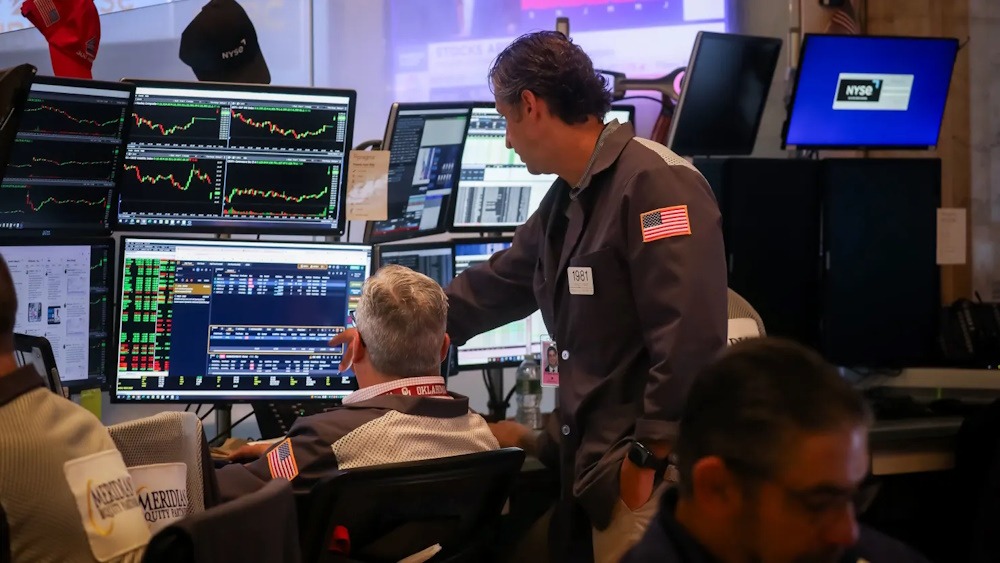
Dow Futures are exhibiting a mixed performance, as investors navigate concerns surrounding a precarious artificial intelligence market and an escalating conflict in the Middle East. A slew of major Wall Street bank earnings, which will unofficially kick off the latest quarterly earnings season, looms large. Sales from luxury giant LVMH fell short of expectations, casting a shadow over the broader high-end goods sector.
Dow futures fluctuated around the neutral point on Tuesday. By 02:48, the Dow futures contract had increased by 225 points, or 0.4%, while S&P 500 futures experienced a decline of 6 points, or 0.1%, and Nasdaq 100 futures saw a decrease of 237 points, or 0.8%. The primary U.S. averages exhibited a mixed performance on Monday, as traders assessed the implications of AI-related concerns, a recent surge in oil prices, and disappointing returns from the fashion powerhouse LVMH. This week, as the quarterly corporate reporting period commences, markets are also gearing up for the release of crucial U.S. inflation data. This information may influence the Federal Reserve’s strategy regarding interest rate policy for the remainder of 2026.
U.S. chipmakers faced notable pressure at the start of the trading week, as an industry tracker declined by 2.7%. Tech stocks in South Korea subsequently experienced significant declines. The losses partially stemmed from reports of advances made by China’s ChangXin Memory Technologies, which fuelled concerns that the gap in the AI race between U.S. firms and their Chinese counterparts might be narrowing. Concerns had already been circulating regarding the AI trade, ignited by the controversy surrounding revenues at ChatGPT-maker OpenAI. It is evident that the demand for AI continues to be robust. However, the path of substantial debt-fueled expenditures by these firms, along with the prospective returns from advancements in AI, remains uncertain.
Shares of LVMH declined in early Paris trading on Tuesday following the release of third-quarter sales figures that did not meet market expectations. Dampened by a sharp slide in demand in its key Chinese market, LVMH reported a 1% rise in organic sales from a year ago to 18.5 billion. That was below estimates for growth of 1.3%, according to a consensus from Visible Alpha. Organic sales at the fashion and leather goods unit, which constitutes approximately half of the group’s total revenue, declined by 5%, compared to an expected decrease of 1.8%. Sales expansion at LVMH’s watches and jewellery division has also experienced a deceleration. Meanwhile, sales in Asia, with China as the predominant luxury market, experienced a decline of 5% year-on-year. A tax crackdown on wealthy individuals in China has negatively impacted luxury demand, compounding challenges for an industry already facing heightened costs stemming from the Iran war.
On the earnings calendar later today, the focus will be on earnings from a string of large U.S. banks, including JPMorgan Chase, Goldman Sachs, Wells Fargo and Citigroup. The results will be the first in a parade of Wall Street returns this week, signaling the start of the quarterly earnings season. Bank of America, Morgan Stanley, and BlackRock are due to report on Wednesday. “[B]ased on the remarks from [management] teams during September sell-side conferences, [third-quarter] earnings should be OK versus print expectations, although there is concern about rising yields negatively impacting [net interest margins] and bond portfolios while capital markets-linked fee revenue could get hurt by stalled issuance (including IPOs) and market volatility,” analysts said in a note. They added that residential mortgage-linked income is set to come under pressure as well. In a separate note, analysts at Deutsche Bank said they expect broader S&P 500 earnings growth to come in at a record 34% in the third quarter, adding that “consensus is again embedding too much of a slowdown, leaving scope for another quarter of above-average beats.”
On Tuesday, oil prices experienced a decline following Russia’s announcement that its diesel exports could surpass the volumes previously outlined in a supply agreement with the U.S., alleviating concerns regarding supply flows from the Gulf. Brent oil futures experienced a decline of 1.5%, settling at $105.09 per barrel by 03:54, whereas West Texas Intermediate crude futures decreased by 1.8%, reaching $92.08 per barrel. Both contracts experienced an upward trajectory on Monday, with Brent concluding at its peak level since September 15. Oil’s declines followed remarks from Russian Deputy Prime Minister Alexander Novak, who stated late Monday that Russia is poised to restore diesel exports to levels exceeding those specified in the supply agreement with U.S. President Donald Trump. On Friday, Trump announced that his administration had temporarily lifted sanctions on Russian fuel. Trump also unveiled a “energy ceasefire” between Russia and Ukraine, although scepticism surrounds the announcement, particularly following reports that Russia has targeted Ukrainian energy infrastructure since Trump’s statement. The outlook remains uncertain for oil supplies from the Gulf, particularly in light of recent attacks on Saudi Arabia’s international airport by Iran-backed Houthi rebels, as well as strikes on tankers in the Strait of Hormuz.