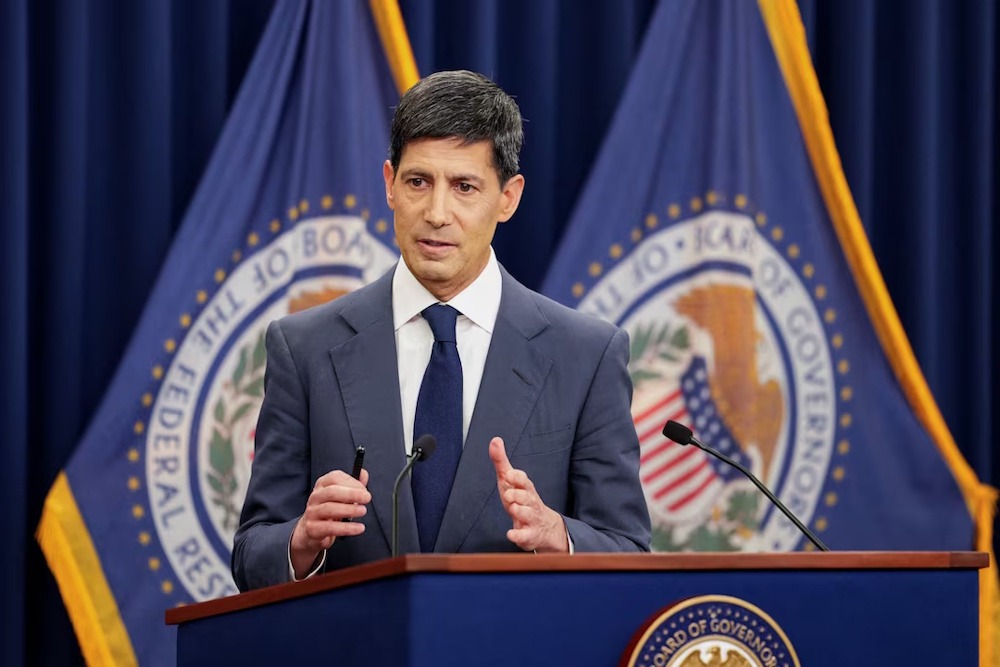
During a panel discussion with fellow central bankers in Sintra, Portugal on Wednesday, Warsh, who has proposed a revision of the Fed’s communication strategy, emphasised his intention to refrain from offering investors forward guidance regarding interest rates. Warsh stated that he thought inflation concerns in particular had started to decline, which put more focus on his opinions of the overall economy. “Warsh’s remarks at Sintra provided no clues about how policy might respond to data just as the economy approaches a critical juncture,” noted analysts.
A day after Warsh’s appearance, new figures revealed that the U.S. economy added fewer jobs than expected in June, while the unemployment rate declined slightly as labour force participation decreased. While the employment landscape in the U.S. showed indications of continued resilience, the report highlighted a “moderation” in the labour market that may be associated with reduced immigration and broader labour supply constraints, according to analysts. Taken together, the two developments this week did not resolve the ongoing debate regarding the Fed’s rate trajectory.
Bets that the central bank will implement an imminent rate hike diminished following the U.S. jobs report on Thursday; however, investors continue to perceive some likelihood of an increase by year-end. In theory, increasing interest rates can assist in managing inflationary pressures driven by energy, though this comes with the potential downside of impacting the labour market and the overall economy. At its June meeting, the Fed maintained rates within the range of 3.5% to 3.75%. However, new projections suggested that officials expect a rate increase to occur sometime in 2026.
“Our baseline remains an extended hold in policy rates, conditional on inflation, activity, and labor market conditions moderating through the summer,” the Barclays analysts stated. “The principal risk is that gains in employment and spending re-accelerate while labor supply remains constrained, keeping inflation pressures elevated and placing hikes on the table.”