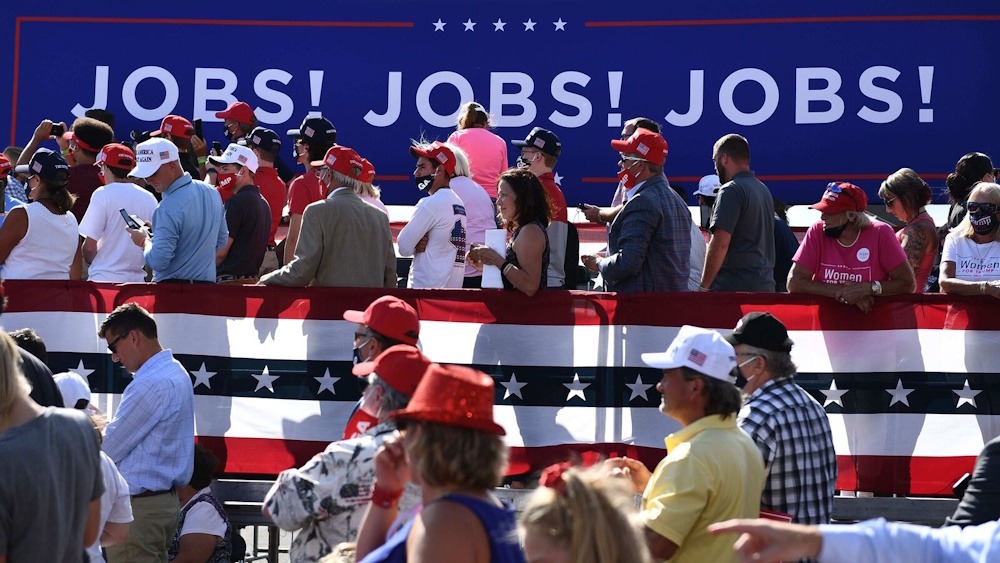
The U.S. economy experienced an unexpected decline of 23,000 jobs in July, with significant downward revisions to gains from the previous two months, potentially undermining expectations for an interest rate hike by the Federal Reserve in the near future. Analysts had projected an increase in nonfarm payrolls of 85,000 for the previous month. Over the prior 12 months, the average monthly gain was 34,000. The public sector was a significant contributor to the weakness observed in July, as noted by analysts. Government employment declined by 53,000, attributed to a significant reduction in local government education payrolls. This was only partially counterbalanced by an increase in private payrolls of 30,000, driven by areas of resilience in healthcare and construction.
Meanwhile, the number of roles added in June was revised down to 20,000 from 57,000.The Labour Department’s Bureau of Labour Statistics revised May’s job gains downward to 63,000 from 129,000, indicating that the cumulative total for the two months was 103,000 less than earlier estimates. Concurrently, the unemployment rate experienced a modest decline to 4.1%, diverging from expectations that it would align with June’s rate of 4.2%. However, the participation rate, a measure of the amount of working-age people either employed or looking for a job, eased down marginally to 61.4% — hovering near a 50-year low, excluding the COVID-19 pandemic. Driven in part by an immigration crackdown during the Trump administration, hundreds of thousands of workers have left the labour market.
Investors are closely monitoring the jobs data as they assess the direction of Federal Reserve interest rates. Debate has emerged regarding the central bank’s potential decision to increase borrowing costs later this year as a strategy to address inflationary pressures driven by energy costs. In theory, increasing interest rates can constrain price increases, tho this comes with the potential downside of impacting the labour market and overall economic activity. U.S. stock futures rose following the jobs report, as investors speculated that the disappointing figures would likely dissuade officials from increasing rates.
Yields on U.S. government bonds, which typically exhibit an inverse relationship with prices and are indicative of rate expectations, experienced a decline. “[T]his is a pretty horrendous report,” analysts said in a note. “The silver lining (in the immediate term) for stocks is that the implications of this report are very dovish for monetary policy, which should push yields lower, although the Fed will face a big dilemma if employment continues to weaken while inflation stays elevated.”