Dow Futures are exhibiting a mixed performance, with the Nasdaq contract managing to retain its gains. This comes as investors seek to recover from a significant downturn influenced by artificial intelligence, which was triggered by the Democrats’ election victory earlier this week. Shares of Tesla and SpaceX have experienced a decline, resulting in a reduction of billions of dollars from their market value and a corresponding decrease in CEO Elon Musk’s personal fortune. Major investors are increasingly scrutinising the feasibility of Anthropic achieving a $1.5-trillion valuation in light of significant upcoming U.S. jobs data.
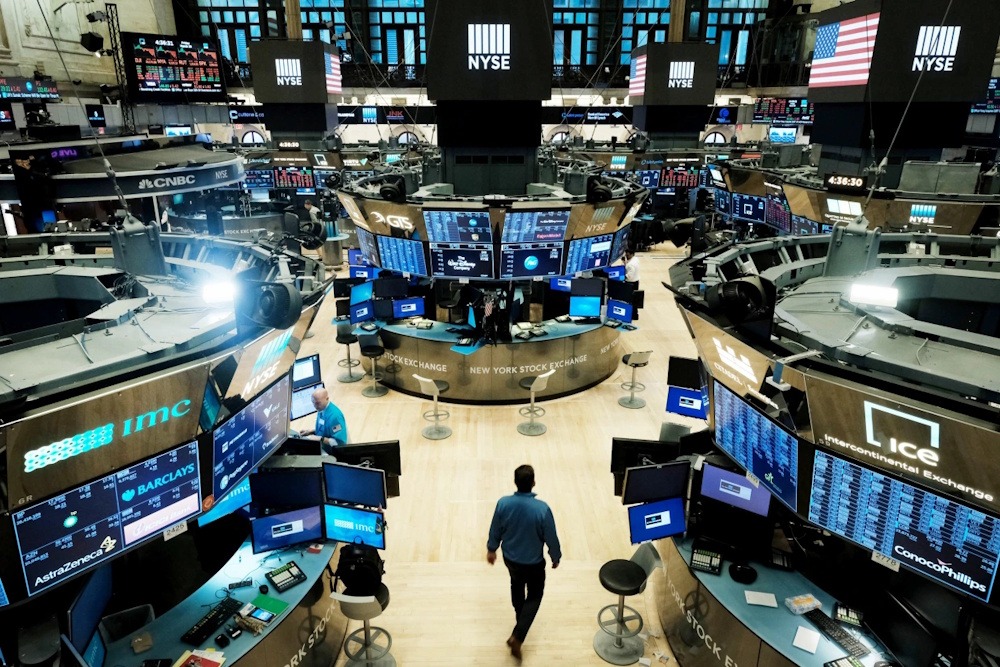
Dow futures were hovering near the neutral point on Friday. By 03:00, the Nasdaq 100 futures contract had increased by 232 points, or 0.9%, while S&P 500 futures remained largely stable, and Dow futures experienced a decline of 534 points, or 1.0%. Markets experienced a notable decline on Thursday, driven by traders concerned about the potential for increased Democratic regulation of AI. This prompted a rush to divest from stocks associated with the emerging technology in favour of liquid assets. Chipmakers, data center developers, and power providers experienced a swift decline as the rout permeated the tech industry, ultimately resulting in an estimated loss of $2.5 trillion in total market value from the Nasdaq Composite. It was a decline not witnessed since March 2020, during the peak of the COVID-19 pandemic. The selloff extended into broader equities, highlighting the extent to which the AI boom has been supporting overall economic growth. At the conclusion of the session, the benchmark S&P 500 experienced a decline of 4.36%, while the blue-chip Dow Jones Industrial Average fell by 3.44%. A tracker of market volatility experienced its most significant daily increase since U.S. President Donald Trump implemented his extensive Liberation Day tariffs last year. Global equities were similarly affected. The MSCI Asia Pacific index experienced its most significant decline since 2025, as Japanese stocks plummeted and Taiwan’s key index entered bear market territory. In South Korea, where semiconductor giants SK Hynix and Samsung Electronics have emerged as significant beneficiaries of the AI era, stock prices experienced a decline substantial enough to activate a circuit breaker. Meanwhile, the pan-European Stoxx 600 commenced trading in negative territory. “Growing fears about the sustainability of the AI buildout in the context of the major shift in U.S. politics have cause[d] another bruising day for tech stocks,” said Joe Maher in a note. “Whether the mid-terms shock turns out to be the catalyst that derails the AI equity boom remains to be seen, but it strengthens our sense that the boom is in its final innings.”
One of the primary casualties of the AI downturn may be Elon Musk, as a decline in the shares of the tycoon’s companies has played a role in the overall decline in the stock market. Musk’s electric car giant Tesla experienced a decline of 11%, resulting in an approximate year-to-date decrease of 24%. SpaceX, the rocket behemoth that Musk took public in a blockbuster offering just months ago, experienced a decline of 9%. When the dust settled, the plunge resulted in a reduction of approximately $460 billion from the combined market value of the two stocks, as per calculations. Musk himself experienced a decline in his net worth by $71 billion, bringing it to $793 billion at one point; however, he continues to hold the title of the world’s richest man, as reported by source. While the companies were part of a broader market decline on Thursday, their downturn was particularly significant in light of the Democratic victories in Texas, the home state of Tesla and SpaceX. Texas Governor-elect Gina Hinojosa has committed to initiating a moratorium on data center development within the state. Meanwhile, James Talarico, marking a significant milestone as the first Democrat to secure a Senate seat in Texas since the late 1980s, has targeted Elon Musk’s substantial financial contributions to Republican opponent Ken Paxton.
The abrupt unwinding in the tech sector may have adversely affected Anthropic, as its potential initial public offering has become intricately linked to the trajectories of artificial intelligence and the broader American economy. Anthropic has been reportedly aiming to go public the week prior to Thanksgiving, with the Claude-maker expected to raise as much as $100 billion at a valuation of approximately $1.5 trillion. However, three major investors who plan to participate in the IPO now believe that the value could decline, with one suggesting that it may potentially decrease to $1 trillion, according to source. Some investors remain eager to observe Anthropic’s returns for October prior to making any adjustments to the valuation, as reported by the source. The report further indicates that a metric employed by the firm to project annual revenue surpassed $80 billion at the conclusion of the previous month. Anthropic may also opt to secure a smaller amount of funding than initially anticipated, according to one investor’s comments. Meanwhile, another investor speculated that the IPO could be postponed until the market presents more advantageous conditions.
Even as they sift through the equity-market aftermath of Thursday, investors must now shift their focus to the crucial U.S. employment report scheduled for later today. The U.S. is anticipated to have increased employment by 65,000 positions in October, a rise from the 29,000 recorded in the previous month, while the unemployment rate is projected to remain consistent with September’s figure of 4.2%. Indicators of robustness in the labour market may strengthen the argument for the Federal Reserve to increase interest rates at its concluding meeting of the year in December. The Fed has indicated a commitment to managing high inflation, and a strong employment landscape may provide them with greater flexibility to increase borrowing costs. Analysts at Deutsche Bank have indicated that “with AI fears gathering pace again,” there has been “a fresh round of question marks as to whether the Fed would hike again.” Market pricing for a rate increase declined in the wake of the stock market downturn.
Oil prices exhibited volatility as renewed assaults on tankers in the Middle East intensified apprehensions regarding supply disruptions. Nevertheless, prices were poised for significant weekly losses as investors reevaluated the prospects of the U.S.-Israeli conflict with Iran. Benchmark Brent crude settled nearly 4% higher on Thursday, while WTI crude gained 2.7%. The rebound followed a decline on Wednesday, when both benchmarks plunged more than 8% to their lowest closing levels since August 31, as U.S. midterm election results initially raised hopes of renewed diplomatic efforts to end the conflict. Since Sunday, at least five vessels have reported incidents, as per the United Kingdom Maritime Trade Operations. The frequency of these attacks is nearing the record of 35 reported vessel incidents from October. The Islamic Revolutionary Guard Corps reported that two oil tankers and a tugboat experienced fires in distinct incidents after attempting to traverse unauthorised pathways through the Strait of Hormuz. Saudi Arabia has issued warnings regarding potential risks near Yanbu, its Red Sea oil export hub, as Yemen’s Iran-aligned Houthi militants persist in their attacks on the kingdom.