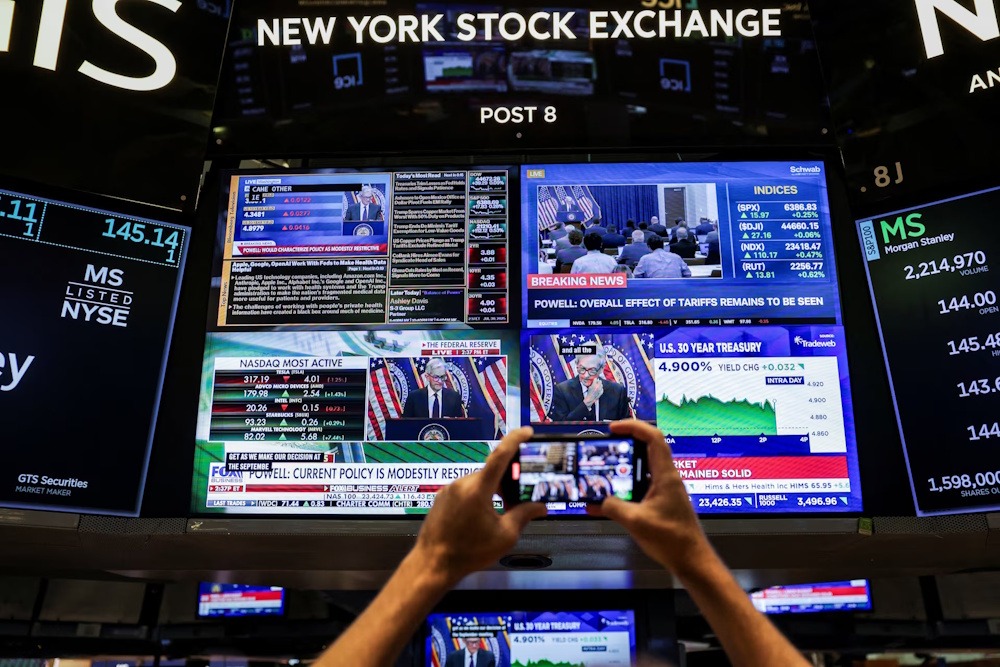
Dow Futures show a slight increase ahead of a week packed with potential catalysts. Oil prices have declined following a significant increase in the previous week, amid concerns regarding a potential revival of hostilities between the U.S. and Iran. Verizon is poised to lead a wave of corporate earnings announcements this week, as attention also turns to social unrest in France and an unexpected election outcome in Brazil.
Dow futures indicated an upward trajectory as the market anticipates a week filled with significant trading activity, characterised by a multitude of corporate earnings reports and crucial interest rate decisions from central banks. By 04:43, the S&P 500 futures contract had risen by 23 points, or 0.3%; Nasdaq 100 futures had gained 64 points, or 0.2%; and Dow futures had advanced by 241 points, or 0.5%. The primary averages on Wall Street experienced volatility on Friday, with all three indices declining. A convergence of elements exerted pressure on sentiment. Anxieties surrounding debt-driven expenditures on artificial intelligence intensified amid concerns regarding persistently elevated interest rates, while oil prices experienced another increase following reports of potential renewed conflicts between the U.S. and Iran. Simultaneously, social unrest and a constrained fiscal situation triggered disturbances in French bond markets, creating additional challenges for investors. U.S. Treasuries demonstrated robust performance, although certain analysts contended that this was attributable to a flight toward the perceived safety of American debt amid an uncertain investment environment.
Oil prices experienced a slight decline after reports emerged indicating that Qatari mediators travelled to Tehran over the weekend in an effort to alleviate tensions with Washington. Recent reports indicate that U.S. President Donald Trump is considering a return to military actions against Iran following the forthcoming American midterm elections in November. On Sunday, Trump conveyed that it is “getting to be decision time” regarding the potential for renewed bombardments of Iran or the possibility of negotiating a deal with Tehran. Last week, Trump suggested the possibility of a new military operation against Iran, which led the Islamic Republic to issue threats of their own retaliatory actions. Additionally, an escalating conflict between Iran-backed Houthi militants in Yemen and Saudi Arabia has been a persistent issue in the background. An exchange of strikes has heightened concerns regarding potential disruptions to the recovery of oil flows from the Middle East. Brent crude futures, the global oil benchmark, were last observed declining by 1.6% at $114.92 a barrel, whereas U.S. West Texas Intermediate crude futures had decreased by 2.0% to $101.25 a barrel. The Brent contract experienced a significant increase of over 6% last week, reaching its highest weekly close since 2022.
While the turmoil in the Persian Gulf remains a primary concern for markets, attention in the coming days will likely shift toward a surge of U.S. corporate earnings. Approximately 25% of the firms within the S&P 500 have disclosed their most recent quarterly outcomes; however, the returns observed thus far have been robust, as noted by analysts at Vital Knowledge. The figures have indicated that underlying demand has been resilient, they noted, adding that cost controls and price increases have also bolstered earnings. Tech sector earnings are poised to face rigorous examination, as investors seek any indications that the recent apprehensions regarding AI infrastructure expenditures are impacting the performance of this vital industry. On Monday, Verizon will showcase the array of reports prior to the market’s opening bell. The telecommunications group has been contending with intense competition from established players such as AT&T and T-Mobile, alongside emerging challengers like Elon Musk’s SpaceX.
Meanwhile, France’s 10-year government bond yields experienced a slight decline. French authorities seemed to have subdued widespread protests throughout the nation over the weekend, alleviating concerns regarding ongoing social turmoil in Europe’s second-largest economy. Public discontent, initially ignited by student demonstrations, has been escalating in France due to concerns over wages, high living expenses, and the state of public services. Labour leaders in the country have announced plans for additional protests next weekend, in conjunction with a nationwide strike scheduled for November 5. However, France received a positive development on Friday as Moody’s upheld its Aa3 rating for French debt, contrary to predictions that it would downgrade the outlook by one level. On Monday, French bond futures have increased, while the euro has appreciated.
In a surprising turn of events, Luiz Inacio Lula da Silva secured a fourth term as Brazil’s president on Sunday evening, narrowly defeating Senator Flavio Bolsonaro, despite trailing him in the initial round of voting. Lula secured approximately 51.8% of the votes, whereas Bolsonaro garnered 48.2%, according to Brazil’s Superior Electoral Court, with 99% of the votes tallied. Bolsonaro, however, declined to acknowledge his defeat to Lula and demanded the annulment of the vote. Bolsonaro asserted that the Supreme Court had intervened in the electoral process by prolonging voting hours in certain regions. The outcome surprised a market that had progressively anticipated a Bolsonaro victory, analysts at Deutsche Bank observed. A Tokyo-listed ETF tracking Brazilian stocks experienced a decline during Asian trading hours. “Lula’s surprise win in the second round of Brazil’s presidential election will dash hopes for reforms that would improve the public finances and strengthen growth prospects. A sharp fall in the real and equities and a rise in bond yields, more than reversing the rally since the first-round vote, are likely,” analysts said in a note.